



Healthcare Automations
15 mins
7 Qventus Alternatives in 2026: Top Picks for Hospital Operations & Patient Flow
Summary
Your Competitors Are Embracing AI – Are You Falling Behind?
Qventus is one of the better-known AI platforms for hospital operations, using machine learning to predict capacity constraints and automate inpatient flow, perioperative, and emergency department workflows. It is powerful, but it is also an enterprise commitment: long implementations, custom pricing, and a focus on large health systems leave many teams looking for something lighter, cheaper, or better matched to a specific bottleneck.
If you are evaluating Qventus alternatives, the right choice depends on whether you need predictive capacity forecasting, real-time bed visibility, perioperative optimization, or flexible operational automation you can deploy quickly.
This guide compares the seven strongest Qventus competitors in 2026, ranked by fit for the most common reasons teams switch. We lead with Keragon, the HIPAA-compliant automation platform that lets operations teams build their own workflows without an enterprise rollout, then cover the capacity-management, command-center, and perioperative platforms most often shortlisted against Qventus. Each entry includes a product overview, pros and cons, pricing, setup expectations, and the tradeoffs to weigh before signing.
Qventus Alternatives Comparison & Ratings Chart
The table below summarizes the seven best Qventus alternatives we cover, weighing core capability, ideal user, and pricing transparency. Most platforms in this category sell to enterprises and carry few public consumer reviews, so ratings are approximate and drawn from G2 and independent research as of mid-2026.
| Software | Key Features | Best For | Pros | Cons | Pricing | Ratings |
|---|---|---|---|---|---|---|
| Keragon | No-code automation, 400+ integrations, AI agents | Flexible operational automation | HIPAA, fast, affordable | Not a capacity ML engine | From ~$99/mo | 4.8 |
| LeanTaaS (iQueue) | Predictive OR, infusion, inpatient flow | Capacity management at scale | Proven outcomes, broad suite | Enterprise cost, longer implementation | Enterprise (custom) | ~4.6 |
| TeleTracking | Real-time bed management, transfer centers | Bed visibility & command centers | Mature platform, real-time flow visibility | Legacy feel, hardware dependencies | Enterprise (custom) | ~4.0 |
| GE HealthCare Command Center | Census forecasting, capacity management dashboards | Command-center operations | Strong forecasting capabilities | Primarily for very large health systems | Enterprise (custom) | Few reviews |
| Care Logistics | Patient progression, LOS reduction | Throughput & length-of-stay optimization | Focused on improving patient flow | Narrower scope than broader operations suites | Enterprise (custom) | Few reviews |
| Apella | AI operating-room analytics | Perioperative & OR efficiency | Deep OR focus, modern AI capabilities | OR-only use case, may require hardware | Enterprise (custom) | Few reviews |
| Commure | Broad operations, RCM, and AI platform suite | Unified health-system operations | Wide platform coverage, enterprise scale | Broad product portfolio still evolving | Enterprise (custom) | Few reviews |
7 Best Qventus Alternatives in 2026
Below are the seven best Qventus alternatives we recommend evaluating in 2026, ordered by fit for the most common use cases teams consider when they move off or rule out Qventus. Each is broken into a product overview, pros and cons, pricing, setup time, and the tradeoffs to weigh.
1. Keragon
Best Overvall
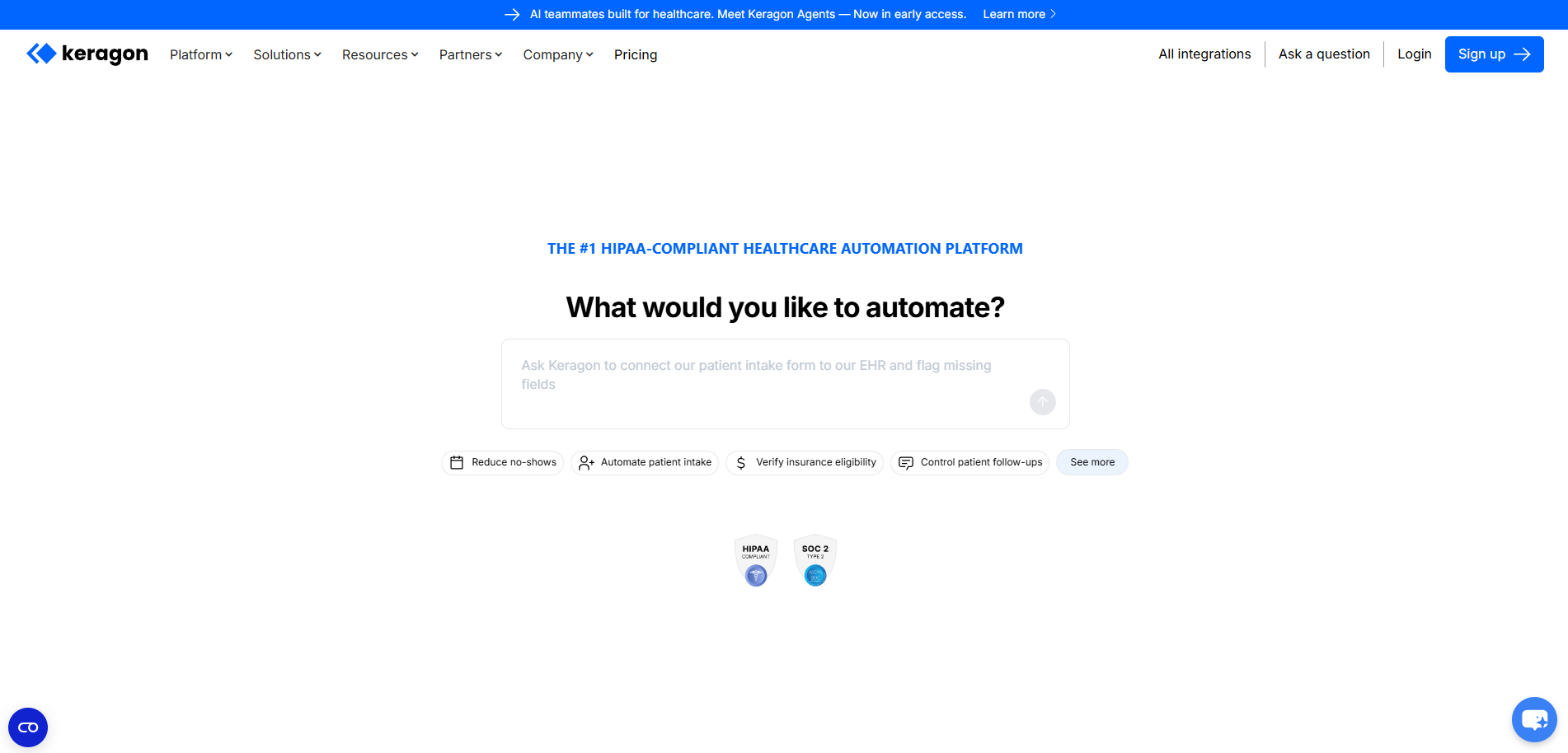
Keragon is a HIPAA-compliant healthcare automation platform that lets operations teams build and run their own workflows across the systems they already use, without an enterprise deployment. Where Qventus delivers predictive capacity intelligence as a packaged enterprise product, Keragon gives you a no-code canvas to automate the operational tasks around capacity and flow: routing discharge and bed-cleaning tasks, triggering transfer and census alerts, syncing ADT events into communication and staffing tools, and notifying the right team when a threshold is crossed. It is the pragmatic choice for teams that want fast, flexible automation rather than a multi-quarter analytics rollout.
Product Overview
Keragon is a no-code automation builder with 400+ healthcare integrations and an AI agent layer that runs on HIPAA-compliant infrastructure.
Teams connect their EHR, ADT feed, scheduling, and communication tools, then build multi-step workflows that move data and trigger actions automatically across them.
Pros & Cons
• Pro: HIPAA-compliant and SOC 2 Type II certified, with a signed BAA and zero AI data retention.
• Pro: No-code builder and 400+ integrations get teams live fast, with no engineering required.
• Con: It is an automation and integration layer, not a dedicated predictive bed-capacity forecasting engine like Qventus or LeanTaaS.
Pricing
Keragon offers tiered, run-based plans with a free trial: Starter from around $99 per month (up to 3 active workflows), Professional (up to 15), Scale Up (up to 100), and custom Enterprise pricing. Confirm current prices on the Keragon pricing page.
Setup
Setup is fast: most customers ship their first production workflow within an afternoon, and full rollouts run in days rather than the months typical of enterprise capacity platforms. Integrations connect through guided flows rather than custom development.
Tradeoffs
Keragon is the strongest pick when you want to automate operational workflows and connect systems quickly and affordably. The tradeoff is scope: it does not ship the predictive capacity and patient-flow models that a large IDN might buy Qventus for. For most operational automation needs, though, it delivers value far faster and at a fraction of the cost, and it can complement a forecasting tool by acting on its signals.
Pre-built templates. HIPAA compliant. No developers needed. Start your free trial today.
2. LeanTaaS (iQueue)
Best for capacity management at scale
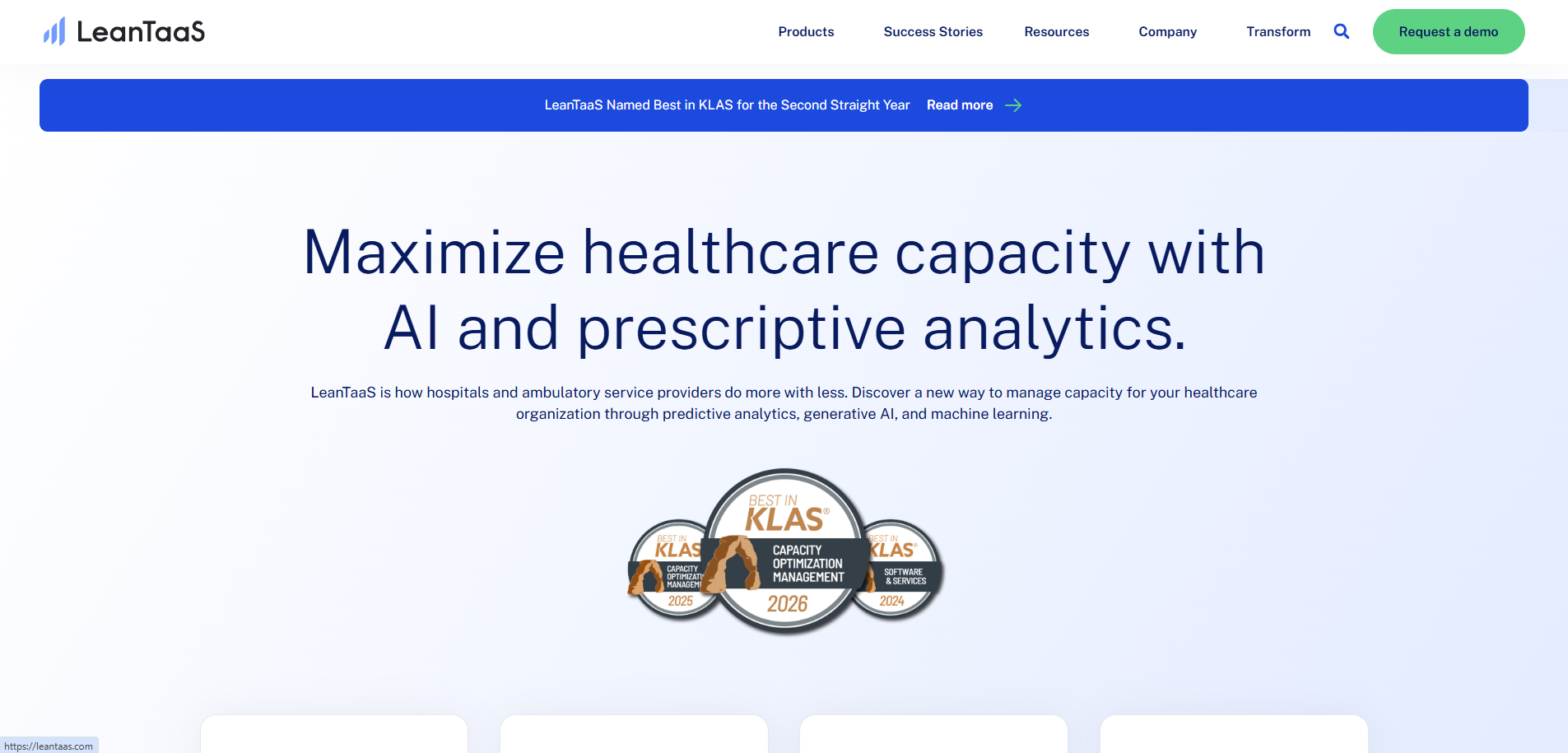
LeanTaaS is the most direct enterprise competitor to Qventus, offering AI-powered capacity management across operating rooms, infusion centers, and inpatient flow through its iQueue suite. After acquiring Hospital IQ, it combined predictive capacity, staffing, and workflow automation into one platform, and its iQueue Autopilot adds generative AI for decision support. It is built for large health systems chasing measurable utilization gains.
Product Overview
iQueue uses machine learning on a large hospital-operations dataset to forecast demand, optimize OR block scheduling, smooth infusion appointments, and predict inpatient capacity. The platform spans hundreds of hospitals and thousands of ORs, beds, and infusion chairs.
Pros & Cons
• Pro: Deep, proven predictive capacity optimization with documented outcomes such as large OR utilization gains.
• Pro: Broad suite covering OR, infusion, and inpatient flow on one platform.
• Con: Enterprise cost and a multi-month implementation make it impractical for small facilities.
Pricing
LeanTaaS uses custom enterprise pricing based on facility size, products, and scope. There is no public self-serve plan; pricing is quoted after a sales process.
Setup
Implementation is an enterprise project, typically running several months and supported by LeanTaaS change-management teams to drive adoption across departments.
Tradeoffs
LeanTaaS is the right pick when capacity optimization at scale is the core need and you have the budget and timeline for an enterprise rollout. Its strengths are forecasting depth and proven results; its limitations are cost, complexity, and a poor fit for smaller organizations that need quick, targeted automation.
3. TeleTracking
Best for real-time bed visibility & transfer centers
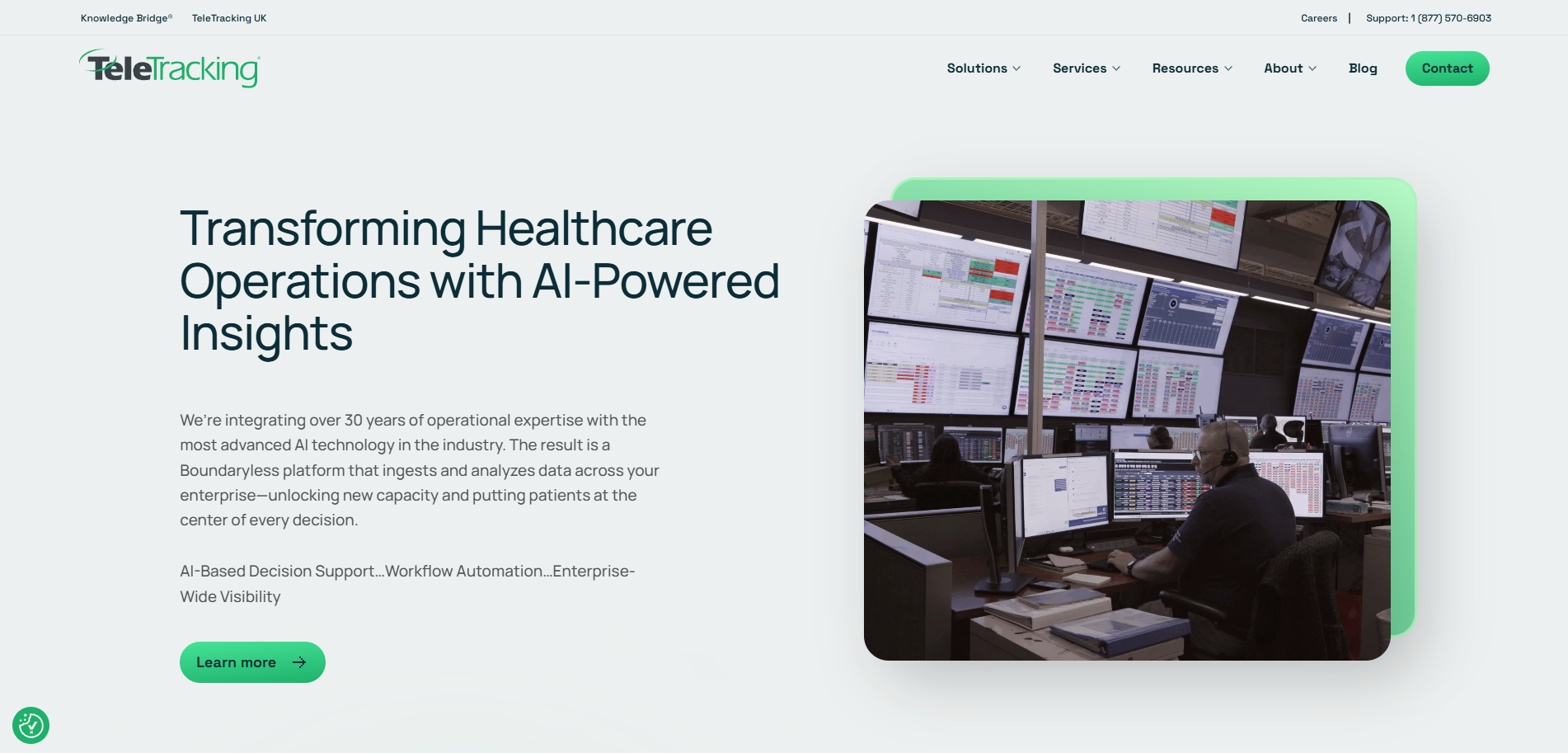
TeleTracking is a long-established patient-flow and capacity-management vendor known for real-time bed visibility and command-center operations. Its Operations IQ platform and transfer and command centers help hospitals see where patients are, coordinate transfers, and move patients through the system. It is a strong fit for organizations whose priority is real-time situational awareness rather than predictive analytics.
Product Overview
TeleTracking combines real-time location and bed-management capabilities with workflow tools for admissions, transfers, and discharges, and supports centralized transfer and command centers that coordinate flow across a system.
Pros & Cons
• Pro: Mature, reliable real-time bed visibility and command-center capability.
• Pro: Strong transfer-center coordination for multi-hospital systems.
• Con: It can feel more legacy than newer AI-native tools, and some deployments rely on RTLS hardware that adds cost and complexity.
Pricing
TeleTracking uses custom enterprise pricing tied to facilities, modules, and any hardware. Pricing is quoted directly and is not published.
Setup
Deployment is an enterprise effort measured in months, with integration to the EHR and ADT feeds and, in some configurations, hardware installation.
Tradeoffs
TeleTracking shines when real-time bed visibility and transfer coordination are the priority, especially for large multi-site systems running command centers. The tradeoffs are a more traditional feel, potential hardware dependencies, and enterprise cost relative to lighter, software-only automation tools.
4. GE HealthCare Command Center
Best for command-center operations
GE HealthCare Command Center software powers the analytics walls and forecasting behind hospital command centers, aggregating data into real-time tiles that support census forecasting, capacity, and throughput decisions. It is aimed at large health systems building centralized operational hubs. The platform grew out of early command-center work with major academic systems.
Product Overview
The Command Center provides configurable software tiles that combine real-time and predictive data across capacity, patient flow, and throughput, giving operations leaders a single view to coordinate decisions across a hospital or system.
Pros & Cons
• Pro: Strong census forecasting and a proven command-center model for large systems.
• Pro: Backed by GE HealthCare scale and integration resources.
• Con: Built for very large enterprises, with the cost and implementation complexity that implies.
Pricing
Pricing is enterprise and custom, scoped to the size of the deployment and the tiles configured. It is not publicly listed.
Setup
Standing up a command center is a significant, multi-month enterprise build involving data integration, tile configuration, and operational change management.
Tradeoffs
GE HealthCare Command Center is the right choice for large systems committed to a centralized command-center operating model with strong forecasting. The tradeoff is that it is overkill, and over budget, for single facilities or teams that need a targeted automation rather than an enterprise analytics hub.
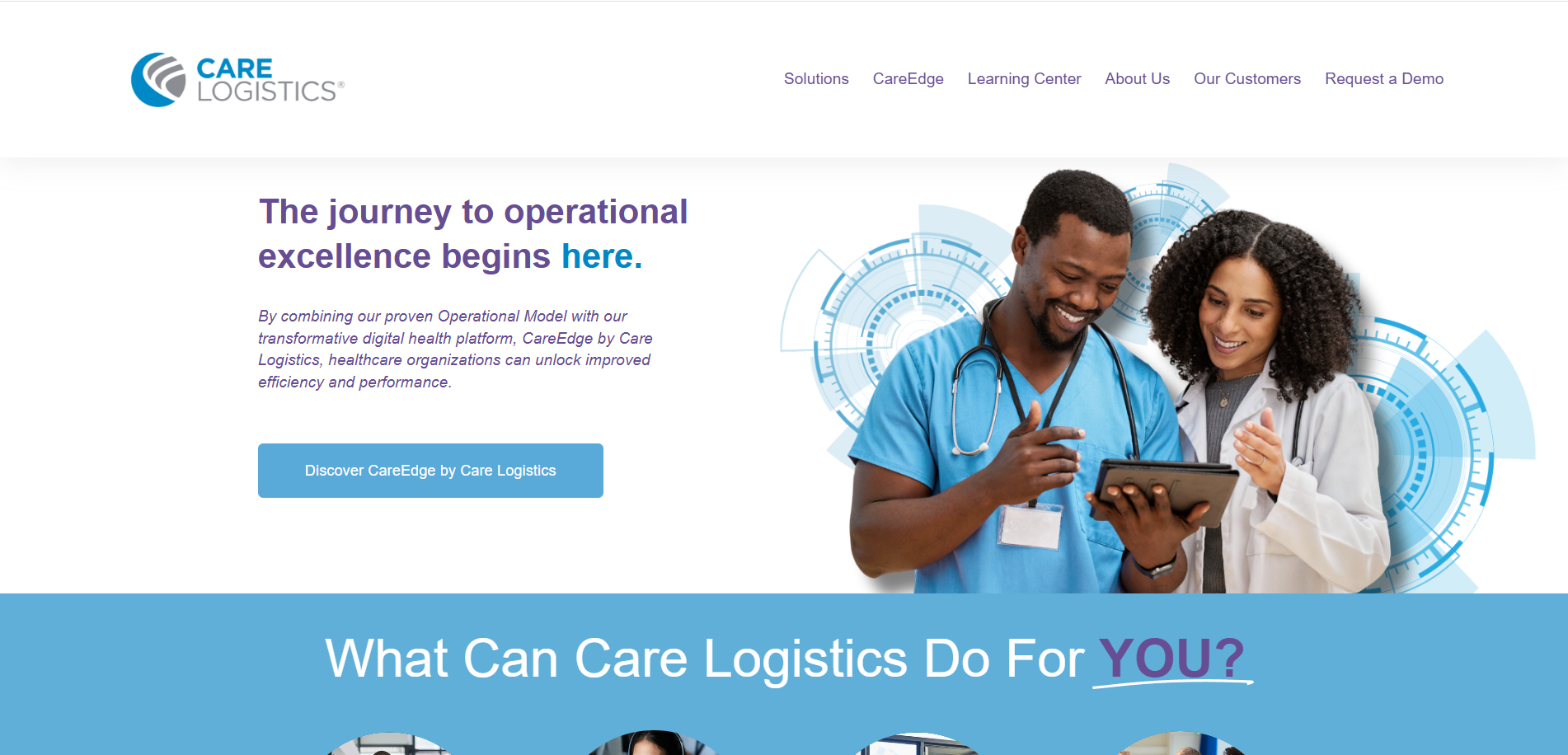
5. Care Logistics
Best for patient progression & length of stay
Care Logistics focuses on patient progression and throughput, helping hospitals reduce length of stay and move patients smoothly from admission to discharge. Its approach blends operational software with care-coordination methodology, making it a fit for organizations whose central problem is throughput and excess bed-days rather than broad capacity forecasting.
Product Overview
Care Logistics provides throughput and care-progression tools that coordinate the steps of a patient stay, surface delays, and target length-of-stay reduction across units.
Pros & Cons
• Pro: Sharp focus on throughput and length-of-stay reduction.
• Pro: Combines software with care-coordination practices for measurable progression gains.
• Con: Narrower scope than full capacity platforms, and an enterprise sales-and-implementation model.
Pricing
Care Logistics uses custom enterprise pricing based on facilities and scope, quoted directly rather than published.
Setup
Implementation runs in months and pairs software rollout with process change to realize throughput improvements.
Tradeoffs
Care Logistics is a strong pick when length of stay and patient progression are your dominant problems. Its focus is also its limitation: if you need OR optimization, infusion scheduling, or broad predictive capacity, you will look to a wider platform like LeanTaaS or Qventus.
6. Apella
Best for perioperative / OR efficiency
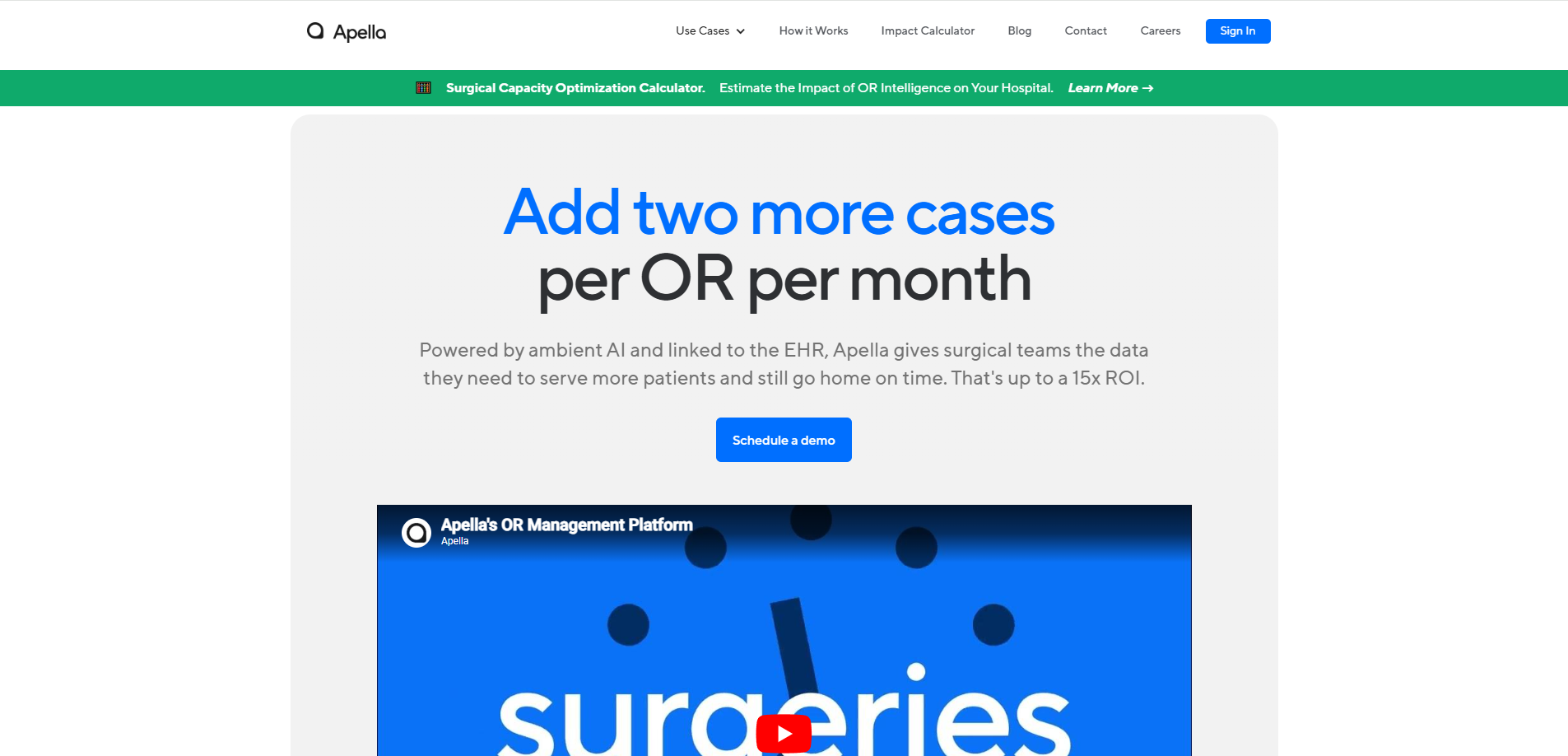
Apella is an AI platform focused on the operating room, using analytics to improve surgical scheduling, turnover, and efficiency. It is a fit for organizations whose biggest operational and financial lever is the OR, where small efficiency gains translate into significant capacity and revenue. It represents the newer, AI-native end of the perioperative tooling market.
Product Overview
Apella applies AI to operating-room data to give surgical and perioperative teams visibility into case timing, predict delays, and optimize OR utilization and turnover.
Pros & Cons
• Pro: Deep, modern AI focus on perioperative and OR efficiency.
• Pro: Targets one of the highest-value areas in the hospital for capacity and margin.
• Con: Narrow to the OR and may require additional hardware or sensors, with an enterprise sales motion.
Pricing
Apella uses custom enterprise pricing scoped to the number of operating rooms and the deployment. Pricing is quoted on request.
Setup
Deployment involves integration with OR scheduling and data systems, and, depending on configuration, hardware setup, so expect a structured implementation rather than instant self-serve.
Tradeoffs
Apella is the right pick when the operating room is your priority and you want AI built specifically for perioperative efficiency. The tradeoff is breadth: it will not manage inpatient flow, ED, or system-wide capacity, so it suits OR-focused investment rather than whole-hospital operations.
7. Commure
Best for unified health-system operations
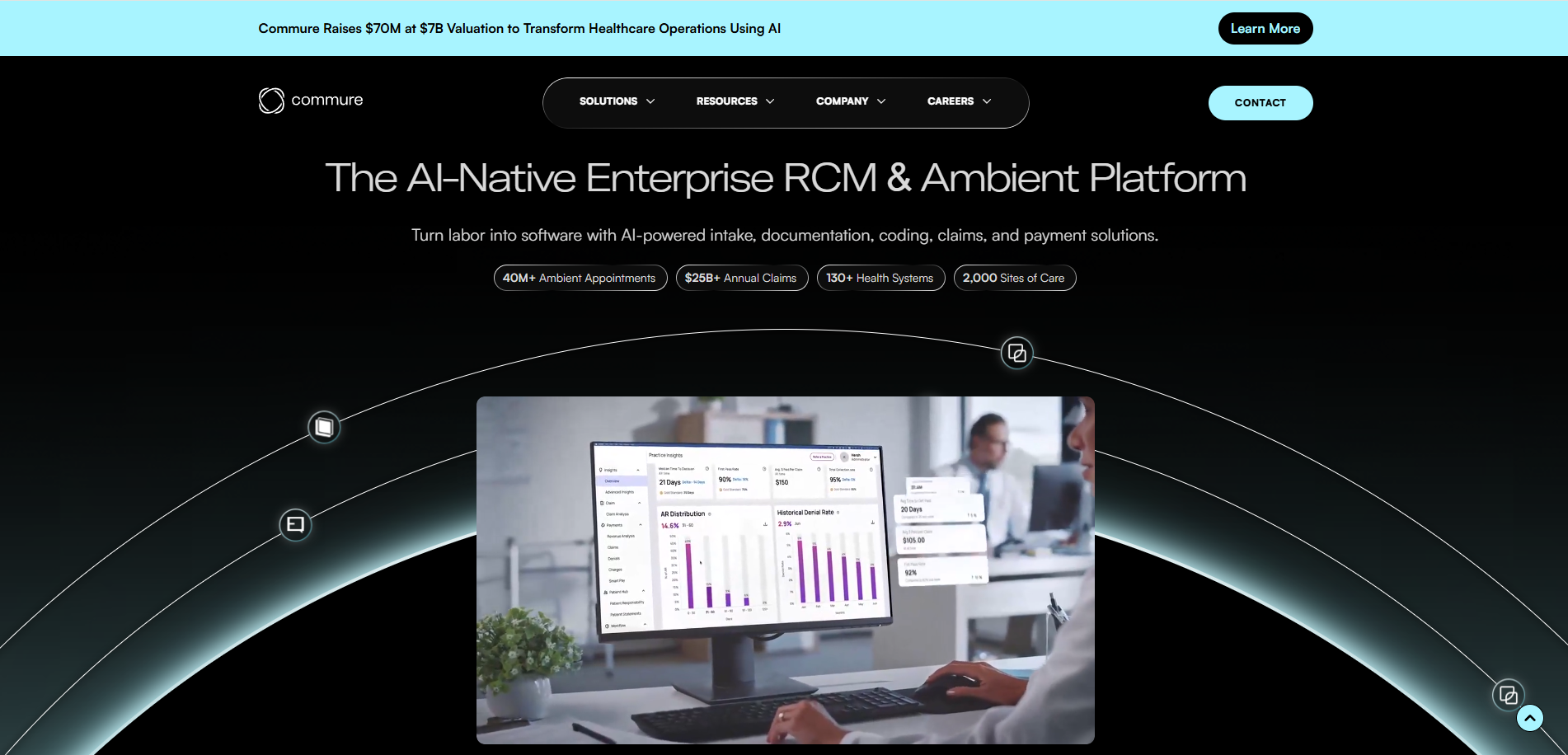
Commure is a broad healthcare technology platform that, through a series of mergers, spans operations, revenue cycle, ambient documentation, and AI tooling for health systems. It appeals to large organizations that want to consolidate multiple point solutions with a single vendor. It is the widest-scope option on this list, which is both its appeal and its risk.
Product Overview
Commure offers a suite that touches clinical and administrative operations, including automation, revenue-cycle tools, and AI products, aimed at unifying disparate health-system workflows on one platform.
Pros & Cons
• Pro: Very broad platform that can consolidate several tools under one vendor.
• Pro: Built for enterprise scale across clinical and operational domains.
• Con: Breadth and ongoing consolidation can mean uneven depth across modules, with enterprise pricing and complexity.
Pricing
Commure uses custom enterprise pricing based on the products selected and organization size. It is not publicly listed.
Setup
Implementation is an enterprise engagement, with timelines that vary by which modules you deploy and how deeply they integrate with your systems.
Tradeoffs
Commure suits large systems looking to consolidate vendors and standardize operations on a single platform. The tradeoff is that a broad suite rarely matches a focused tool in any one area, so evaluate the specific module you need against best-of-breed alternatives before committing.
Why Choose the Alternatives to Qventus Software
Teams evaluating alternatives to Qventus software usually share a similar set of frustrations. Below are the most common reasons buyers look elsewhere, drawn from how these tools are compared and reviewed.
Cost and enterprise commitment
Qventus is priced and packaged for large health systems, which puts it out of reach for single facilities, surgical centers, and smaller hospitals. Alternatives that start with a free trial or transparent, lower entry pricing, like Keragon, give smaller teams a path to automation without an enterprise contract.
Faster time-to-value
Enterprise capacity platforms can take months to implement before they deliver results. Teams that need a specific bottleneck solved now often prefer a tool they can configure in days, which is where flexible automation platforms win.
Focused fit for a specific bottleneck
Some organizations do not need a broad operations suite; they need OR efficiency, bed visibility, or throughput. Specialized alternatives like Apella, TeleTracking, and Care Logistics solve one problem deeply rather than charging for a platform you will only partly use.
Flexibility and ownership
Predictive platforms tend to deliver recommendations within their own model. Teams that want to build, edit, and own their own operational automations, connecting whatever systems they use, prefer a no-code automation layer they control rather than a black-box product.
How to Choose the Right Qventus Alternatives
Picking the right Qventus competitor comes down to matching the tool to your biggest problem, your systems, and your appetite for an enterprise rollout. Use the steps below to narrow the field.
Identify your biggest operational bottleneck
Be specific about the problem: OR utilization, bed capacity, length of stay, ED crowding, or general operational busywork. The category leader differs for each, so naming the bottleneck rules most options in or out immediately.
Check EHR and ADT integration
Confirm the tool integrates natively with your EHR (Epic, Oracle Health, or MEDITECH) and your ADT feed, since operations tools live or die on real-time data. Native integration saves months versus custom interfaces.
Evaluate predictive vs prescriptive vs automation
Decide whether you need forecasting (what will happen), prescriptive recommendations (what to do), or automation (do it for me). LeanTaaS and Qventus lean predictive and prescriptive; Keragon focuses on automation and orchestration; TeleTracking emphasizes real-time visibility.
Assess HIPAA compliance, cost, and time-to-value
Verify HIPAA compliance and a signed BAA, then weigh total cost and implementation time against the value you expect. A cheaper, faster tool that solves 80% of the problem often beats a costly platform that takes a year to pay off.
Key Features to Look for When Exploring Qventus Competitors
When you shortlist Qventus competitors, the feature checklist matters more than the brand. The features below separate a tool that changes daily operations from one that just adds another dashboard.
Real-time EHR and ADT integration
Operations tools must pull live admission, discharge, and transfer data from your EHR. Native, real-time integration is the foundation; without it, predictions and automations run on stale data.
Predictive and prescriptive analytics
The strongest platforms forecast capacity and demand and then recommend specific actions, rather than only reporting what already happened. Decide how much of this you actually need for your bottleneck.
Workflow automation and alerting
Insight only helps if it triggers action. Look for the ability to automate tasks and route alerts to the right person automatically, so a predicted bottleneck or a crossed threshold produces a response without manual monitoring.
HIPAA compliance and security
Any tool touching patient and operational data must be HIPAA compliant, sign a BAA, and hold SOC 2 Type II certification, with a clear policy on data use. This is non-negotiable for production deployment.
Scalability across departments and sites
Choose a tool that can extend from one unit or facility to your whole system as you grow, so you are not re-platforming after the first win. Configuration-driven scaling beats per-site custom builds.
Cost Comparison: Qventus vs Competitors
Qventus does not publish pricing; like most enterprise hospital-operations platforms, it quotes custom contracts scoped to a health system. LeanTaaS, TeleTracking, GE HealthCare Command Center, Care Logistics, Apella, and Commure follow the same model, with pricing that reflects multi-department, multi-site deployments and significant implementation and change-management costs. For large systems, that investment can pay off through measurable capacity and throughput gains, but it is a major commitment in both budget and time.
The clearest cost contrast is Keragon, with tiered plans starting around $99 per month with a free trial. It is not a predictive capacity engine, but for the operational automation and integration work that surrounds capacity and flow, it delivers value in days at a tiny fraction of enterprise pricing, and with no procurement marathon.
The practical decision: if you are a large IDN whose core need is predictive capacity optimization across OR, infusion, and inpatient units, budget for an enterprise platform like LeanTaaS or Qventus. If you are a smaller hospital, surgical center, or operations team that wants to automate specific workflows and connect your systems quickly and affordably, start with Keragon and add a specialized tool only where you need depth.
Which Qventus Alternative Is Right for Your Business?
Match the tool to your dominant need. For flexible, affordable operational automation you can deploy fast, choose Keragon. For enterprise capacity management across OR, infusion, and inpatient flow, choose LeanTaaS. For real-time bed visibility and transfer centers, choose TeleTracking, and for a centralized command-center model, GE HealthCare Command Center.
For throughput and length-of-stay reduction, Care Logistics fits; for operating-room efficiency, Apella; and for consolidating many operational tools under one enterprise vendor, Commure. Most organizations are best served by naming their biggest bottleneck, choosing the tool that solves it deeply, and using a flexible automation layer to connect everything else.
Key takeaways
Qventus is a capable enterprise hospital-operations platform, but its cost, long implementation, and large-system focus push many teams to look at alternatives.
The best Qventus alternative depends on your bottleneck: capacity (LeanTaaS), bed visibility (TeleTracking), command center (GE HealthCare), throughput (Care Logistics), OR (Apella), or consolidation (Commure).
Keragon is the best overall pick for teams that want flexible, HIPAA-compliant operational automation they can deploy in days, starting around $99 per month, rather than a multi-quarter enterprise rollout.
Whatever you choose, confirm real-time EHR and ADT integration, a signed BAA, and a realistic time-to-value before committing.
FAQs
What are the main limitations of Qventus that lead teams to evaluate alternatives?
Teams cite Qventus’s enterprise cost, long implementation timelines, and large-health-system focus as the main reasons to look elsewhere. Smaller hospitals and surgical centers often cannot justify the commitment, and some buyers want a tool focused on one bottleneck or a flexible automation layer they can deploy quickly.
Which Qventus alternatives integrate with Epic, Oracle Health (Cerner), or MEDITECH?
Most do. LeanTaaS, TeleTracking, GE HealthCare Command Center, and Keragon all integrate with major EHRs, and Keragon connects to Epic, Oracle Health, and 400+ healthcare systems through a no-code layer. Always confirm native, real-time ADT integration for your specific EHR before purchase.
Are there cheaper alternatives to Qventus for smaller hospitals or single facilities?
Yes. Keragon is the most accessible, with published plans starting around $99 per month and a free trial, making operational automation viable for single facilities and smaller hospitals. Specialized tools can also be scoped narrowly, but most capacity platforms remain enterprise-priced and better suited to larger systems.
Can these tools handle operations beyond inpatient flow (perioperative, ED, and capacity management)?
Yes. LeanTaaS spans OR, infusion, and inpatient flow; Apella focuses on perioperative; TeleTracking and GE HealthCare cover capacity and command-center operations; and Keragon can automate workflows across any of these areas by connecting the underlying systems rather than specializing in one.
Which Qventus alternative is best for academic medical centers, community hospitals, or surgical centers?
Academic medical centers and large systems often fit LeanTaaS or GE HealthCare Command Center; community hospitals may prefer TeleTracking or Care Logistics for flow and throughput; and surgical centers get the most from Apella for OR efficiency or Keragon for flexible, affordable automation across smaller operations.
How do AI hospital operations platforms stay HIPAA compliant and integrate with the EHR?
They sign a Business Associate Agreement, hold SOC 2 Type II certification, encrypt data in transit and at rest, and integrate with the EHR through certified interfaces or APIs that read real-time ADT data. Always verify the BAA and the specific integration method for your EHR before deploying.
Related Articles


_%20Use%20Cases%20%26%20Benefits.png)
Related Articles


