AI in Healthcare
15 mins
15 Top AI Agent Companies in the Healthcare Industry in 2026
Summary
Your Competitors Are Embracing AI – Are You Falling Behind?
Traditional healthcare AI analyzes data and stops. AI agents act on it. They execute multi-step workflows across EHRs, billing systems, scheduling platforms, and patient communication channels without waiting for a human to copy-paste data between screens, approve a routine step, or trigger the next action manually.
The distinction matters because healthcare is full of sequential, rule-heavy processes (intake, eligibility, prior auth, coding, claims, follow-up) where the bottleneck is not intelligence but execution across disconnected systems. AI agent companies in healthcare build the autonomous systems that close this execution gap.
We evaluated 15 AI agent companies across six criteria: agentic capabilities (autonomous action, multi-step execution), healthcare integration depth, HIPAA compliance, production deployments at scale, pricing transparency, and category coverage across clinical, administrative, and patient-facing use cases.
| Platform | Best For |
|---|---|
| Keragon | Workflow Orchestration |
| Accelirate | Revenue Cycle & Back-Office Automation |
| Hippocratic AI | Patient-Facing Voice Agents |
| Notable Health | Patient Access Automation |
| Hyro | Health System Conversational AI |
Top AI Agent Companies in Healthcare: Comparison Table
| Company | Best For | Agent Type | HIPAA | Pricing | Score | Key Differentiator |
|---|---|---|---|---|---|---|
| Keragon | Workflow orchestration | Operational | Yes + SOC2 | From $99/mo | 9.4/10 | 400+ connectors, MCP layer, no-code AI agents |
| Accelirate | RCM & back-office automation | Operational / Administrative | Yes (BAA-backed) | Custom / project-based | 9.2/10 | Agentic RPA implementation partner, 70% prior-auth turnaround reduction, UiPath Maestro-led |
| Hippocratic AI | Patient-facing voice | Clinical support | Yes | Enterprise | 9.0/10 | Safety-first LLM for non-diagnostic tasks |
| Notable Health | Patient access | Administrative | Yes | Enterprise | 8.8/10 | 90% reduction in check-in time (NKCH) |
| Hyro | Health system comms | Conversational | Yes | Enterprise | 8.6/10 | Adaptive AI across chat, voice, SMS |
| Qure.ai | Diagnostic imaging | Clinical | Yes | Enterprise | 8.6/10 | FDA-cleared, 100+ countries |
| Sully.ai | Clinical workflows | Multi-agent | Yes | Enterprise | 8.4/10 | Modular agents: intake, coding, billing, triage |
| Viz.ai | Care coordination | Clinical | Yes | Enterprise | 8.4/10 | FDA-cleared stroke detection + team alerting |
| Abridge | Clinical documentation | Documentation | Yes | Enterprise | 8.2/10 | Ambient AI scribe with EHR integration |
| Suki AI | Voice documentation | Voice | Yes | Enterprise | 8.0/10 | Voice-first clinical notes, EMR-integrated |
| Kore.ai | Enterprise AI platform | Platform | Yes | Enterprise | 8.0/10 | Gartner Leader, multi-channel agents |
| Aidoc | Radiology triage | Clinical | Yes | Enterprise | 8.0/10 | 50+ FDA-cleared algorithms, 2,000 hospitals |
| Ada Health | Symptom assessment | Patient-facing | Yes | Free + Enterprise | 7.8/10 | Clinical-grade triage, multilingual |
| Beam AI | Multi-agent operations | Operational | Yes | Custom | 7.6/10 | Pre-built agent library, multi-agent system |
| Thoughtful AI | RCM agents | Financial | Yes | Custom | 7.4/10 | End-to-end autonomous RCM agents |
Our Scoring Methodology
| Criterion | Weight | What We Measured |
|---|---|---|
| Agentic Capabilities | 25% | Autonomous multi-step execution. Ability to reason, plan, and act across systems without human intervention. Tool use, data retrieval, and decision-making within workflows. |
| Healthcare Integration | 20% | EHR connectivity. Billing, scheduling, and lab system integration. FHIR/HL7 support. Number of pre-built healthcare connectors. MCP protocol support. |
| HIPAA Compliance | 20% | Native HIPAA compliance. SOC 2 Type II. BAA availability. PHI handling architecture. Audit trails. |
| Production Scale | 15% | Number of healthcare organizations in production. Named customer deployments. Documented outcomes. Not just pilots. |
| Pricing & Accessibility | 10% | Billing model transparency. Starting price. Accessibility for small to mid-size organizations vs. enterprise-only. |
| Reviews & Support | 10% | G2/Capterra ratings. Healthcare-specific support. Onboarding quality. Documentation. |
15 Top AI Agent Companies in Healthcare in 2026
#1. Keragon: Best AI Agent Company for Healthcare Workflow Orchestration
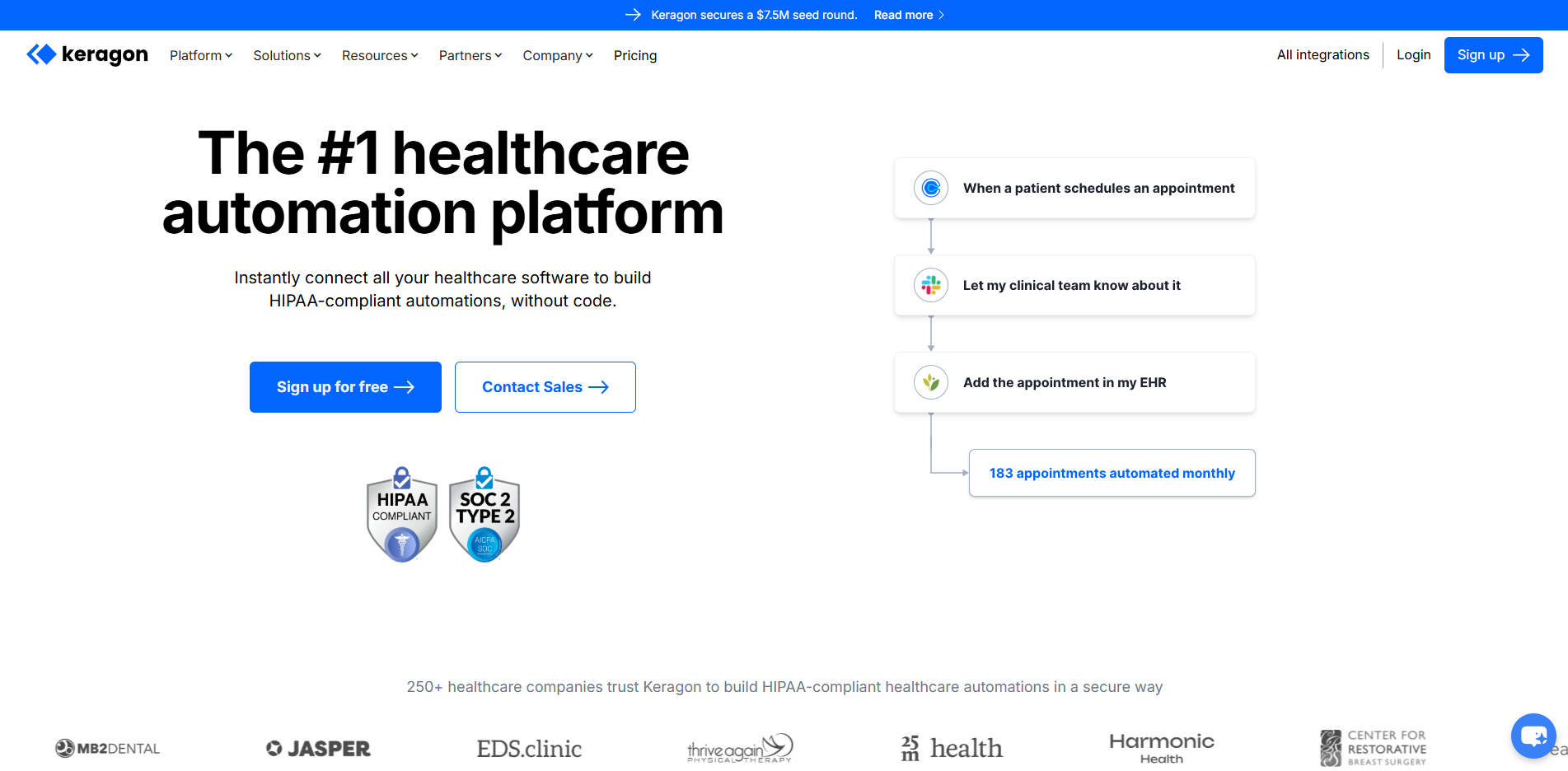
Score: 9.4/10. Highest marks for integration depth (10/10), HIPAA compliance (10/10), and agentic workflow execution (9/10). Scored lower on clinical AI capability (N/A, orchestration platform) and review volume (7/10).
Keragon is a HIPAA-compliant AI agent orchestration platform purpose-built for healthcare. Where most AI agent companies on this list build agents that handle a single task (documentation, coding, imaging), Keragon orchestrates the execution layer: connecting AI agent outputs to downstream systems across 400+ healthcare tools, EHRs, billing platforms, scheduling systems, and communication channels.
Keragon's MCP (Model Context Protocol) layer enables external AI agents to connect securely to healthcare integrations, making it the infrastructure layer that other AI agent companies plug into for system-level execution.
Best for healthcare organizations that need AI agents to execute multi-step workflows across EHRs, billing, scheduling, and communication tools, not just analyze data or generate text, but act on it across systems.
Product Overview
Pain 1: AI agents that can reason but cannot execute across systems.
Most AI agents can generate a clinical note, suggest a code, or answer a patient question. But they cannot update the EHR, trigger a billing workflow, notify the care team, and schedule a follow-up simultaneously. Keragon provides the execution layer: when an AI agent completes a task, Keragon routes the output to the right systems automatically through connectors to Athenahealth, DrChrono, Elation Health, Healthie, ModMed, and 400+ more.
Pain 2: HIPAA compliance gaps in agent infrastructure.
When AI agents interact with PHI, the entire execution chain must be HIPAA compliant: the agent itself, the data in transit, the receiving system, and every step in between. Keragon provides SOC 2 Type II + HIPAA compliance across the entire orchestration layer, with encryption, audit logging, BAAs, and a 7-day data retention policy.
Pain 3: Each AI agent requires custom integration work.
Deploying an AI agent is one project. Connecting it to your EHR, billing system, and scheduling tool is three more. Keragon's no-code builder and pre-built workflow templates eliminate this integration tax, letting teams connect AI agents to downstream systems in days, not months.
Pricing
Free 14-day trial. Paid plans from $99/month. Volume-based.
Tradeoffs
Orchestration and execution platform, not a clinical AI agent itself. Best paired with clinical AI agents (Hippocratic AI, Abridge, Sully.ai) for end-to-end agentic workflows.
Mini Case Study
The Autism Center of Illinois deployed Keragon to automate intake workflows connecting IntakeQ, Google Drive, Slack, and Monday.com. Result: 10 hours/week reclaimed, 2-3 days faster client onboarding, full HIPAA compliance.
Join hundreds of healthcare oranizations automating smarter. Start your 14-day Keragon trial now.
#2. Accelirate: Best AI Agent Company for RCM and Healthcare Operations Automation
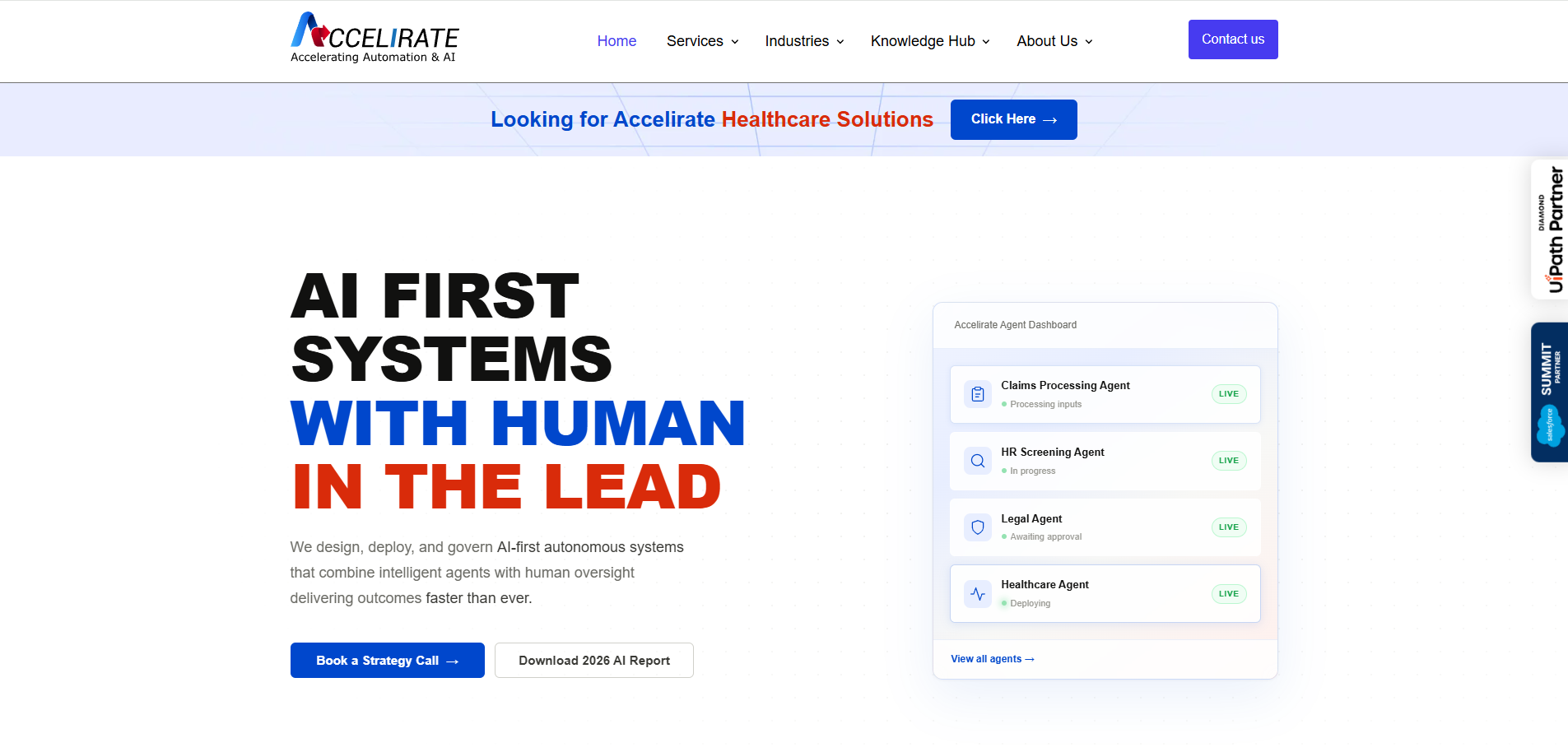
Score: 9.2/10. Highest score for RCM automation and documented production results (10/10) and operational workflow execution (9/10). Lower score on clinical AI capabilities (6/10).
Accelirate is one of the leading service providers for AI agents in healthcare revenue cycle management (RCM), prior authorization, denials management, and compliance workflows. The company builds agents on its own and integrates the UiPath platform, where customers can choose from Denial's Intelligent Platform, Post Submission Claim Intelligence, and Proactive Expiration & Recall Monitoring.
The enterprise serves as a provider and has 500+ certified automation professionals with healthcare-specific expertise. The platform company also supports major compliance standards such as HIPAA and FHIR.
Best for hospitals, health insurers, and managed care organizations that automate end-to-end RCM workflows from prior authorization and claim submission to denial appeals and utilization review.
Tradeoffs
- Focus on service-led models and their product platforms. The company handles the entire implementation from start to finish. It is not designed for clinical AI use cases.
#3. Hippocratic AI: Best Patient-Facing Voice AI Agent
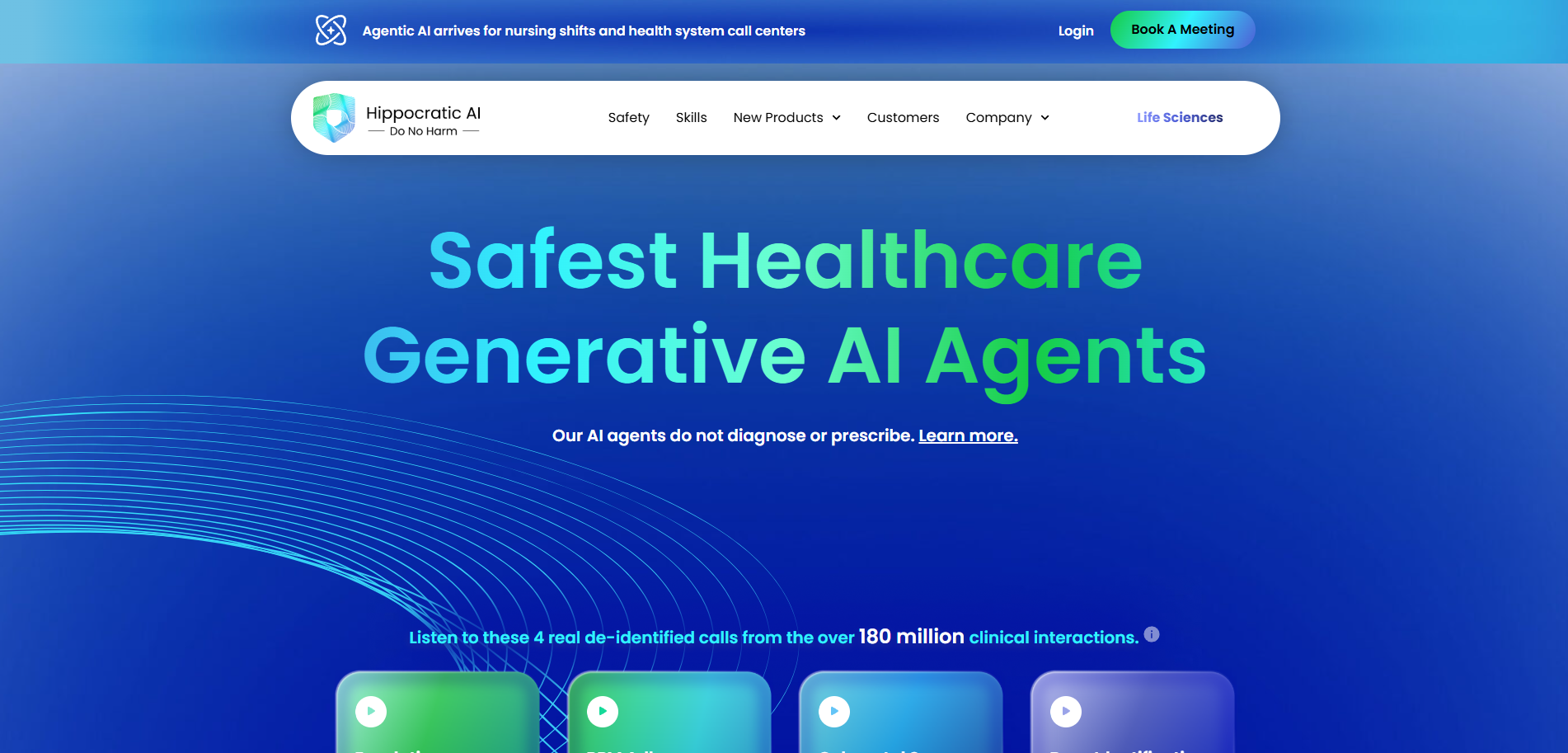
Score: 9.0/10. Highest for clinical safety (10/10) and patient-facing agent maturity (9/10). Lower on operational workflow automation (4/10).
Hippocratic AI builds voice-based AI agents specifically for patient-facing clinical support tasks: chronic care management, post-discharge follow-ups, medication adherence calls, wellness coaching, and insurance coordination. Its safety-first LLM was trained on medical literature and clinical papers, with clinicians actively building and customizing agents through the Clinician Creator program. Hippocratic AI focuses exclusively on non-diagnostic, low-risk tasks where AI can augment the nursing workforce.
Best for health systems and digital health companies scaling patient outreach, chronic care management, and follow-up programs with clinician-designed AI voice agents.
Tradeoffs
- Focused on patient-facing voice interactions. Does not address operational workflows (billing, scheduling, data routing).
#4. Notable Health: Best AI Agent for Patient Access Automation
Score: 8.8/10. Highest for patient access impact (10/10). Lower on clinical agent capabilities (4/10).
Notable Health uses AI agents to automate patient registration, appointment scheduling, referrals, care authorization, coding, and insurance verification, all integrated with EHRs. Production results are strong: North Kansas City Hospital achieved a 90% reduction in patient check-in time (from 4 minutes to 10 seconds) and increased pre-registration from 40% to 80% using Notable's agents.
Best for health systems automating front-office workflows: patient intake, check-in, scheduling, and prior authorization at scale.
Tradeoffs
- Enterprise-focused. Strongest in patient access; limited coverage for clinical documentation, imaging, or RCM back-end.
#5. Hyro: Best Conversational AI Agent for Health Systems
Score: 8.6/10. Highest for multi-channel coverage (9/10). Lower on clinical depth (4/10).
Hyro builds adaptive conversational AI agents that handle patient interactions across chat, voice, and SMS for health systems. Its agents manage appointment scheduling, physician lookup, FAQ responses, prescription refills, and call center routing. Hyro's key differentiator is its adaptive architecture: agents pull answers from the organization's existing content and adapt as that content changes, without manual intent training.
Best for health systems scaling patient self-service across web, phone, and SMS without manual bot training.
Tradeoffs
- Conversational AI agent, not a workflow automation or clinical AI platform. Focused on patient communication, not data routing or clinical decision support.
#6. Qure.ai: Best AI Agent for Diagnostic Imaging
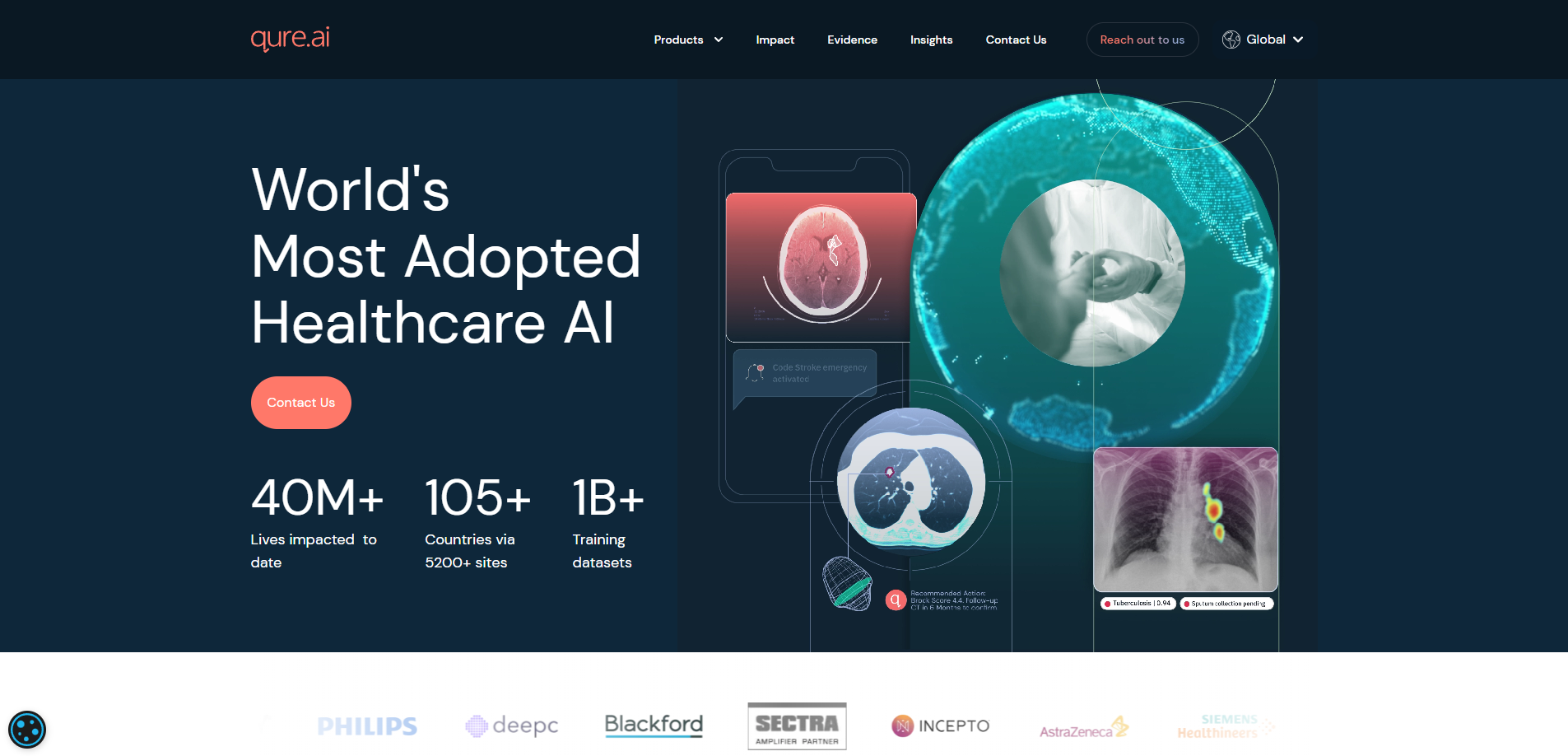
Score: 8.6/10. Highest for imaging AI maturity (10/10). Lower on administrative automation (2/10).
Qure.ai builds AI agents that analyze X-rays, CT scans, and MRIs to detect abnormalities including lung nodules, tuberculosis, strokes, and fractures. FDA-cleared and deployed in 100+ countries. Qure.ai's agents act autonomously within radiology workflows: they continuously scan incoming images, flag critical findings, and prioritize worklists without radiologist initiation.
Best for radiology departments, screening programs, and resource-limited settings needing autonomous imaging analysis.
Tradeoffs
- Focused exclusively on diagnostic imaging. Does not address administrative, operational, or patient-facing agent workflows.
#7. Sully.ai: Best Multi-Agent System for Clinical Workflows
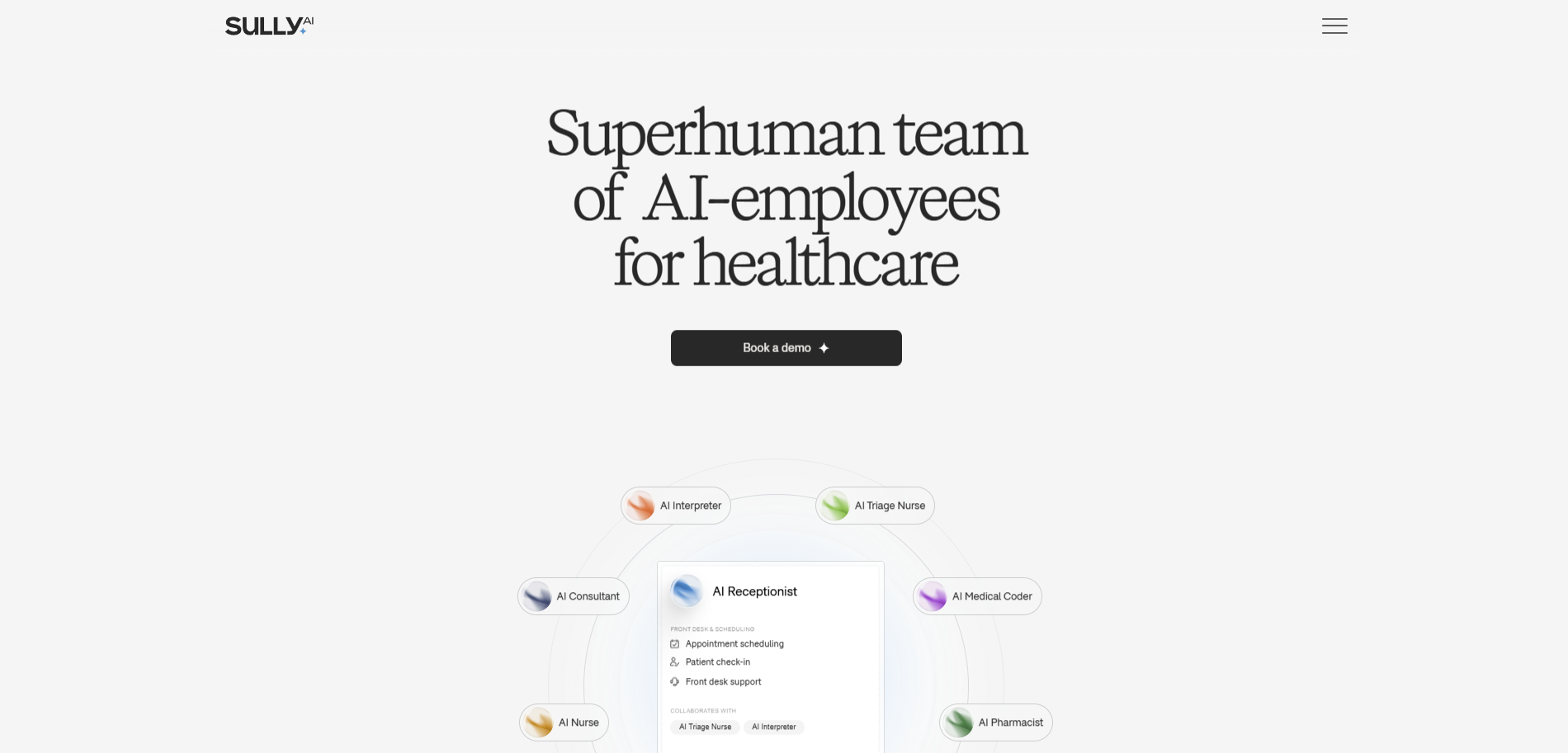
Score: 8.4/10. Strong for modular agent architecture (9/10). Lower on production track record (6/10).
Sully.ai provides a modular agentic architecture with specialized agents for intake, coding, billing, triage, and clinical documentation. Each agent handles a specific workflow autonomously, and the agents coordinate across the full clinical and administrative workflow. Voice-to-action functionality translates physician speech into EMR actions. HIPAA compliant.
Best for practices and health systems seeking a multi-agent approach that covers clinical documentation, coding, and billing in a coordinated system.
Tradeoffs
- Newer platform with less production track record than established vendors. Modular approach means evaluating multiple agents.
#8. Viz.ai: Best AI Agent for Care Coordination
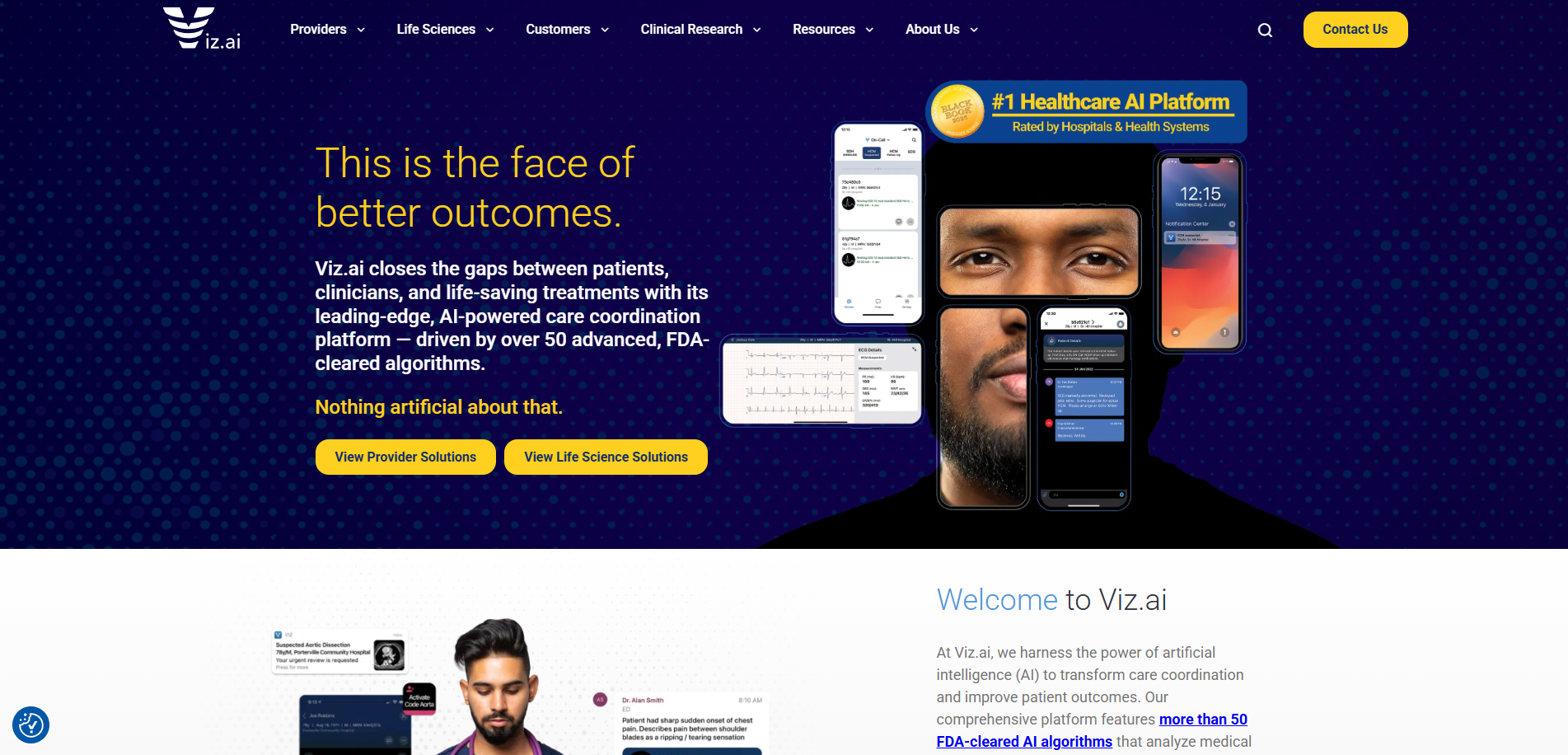
Score: 8.4/10. Highest for time-critical coordination (10/10). Lower on non-emergency use cases (4/10).
Viz.ai's AI agents detect time-critical conditions from imaging (large vessel occlusion strokes, pulmonary embolisms) and autonomously alert the appropriate care team with all relevant data attached. The agent does not just flag a finding; it identifies the specialist, routes the imaging, and coordinates the response. FDA-cleared. For more on imaging AI, see our guide to AI tools in healthcare.
Best for stroke centers and hospitals needing autonomous care coordination for time-critical conditions.
Tradeoffs
- Focused on acute/emergency care coordination. Not designed for routine workflows or administrative automation.
#9. Abridge: Best AI Agent for Clinical Documentation
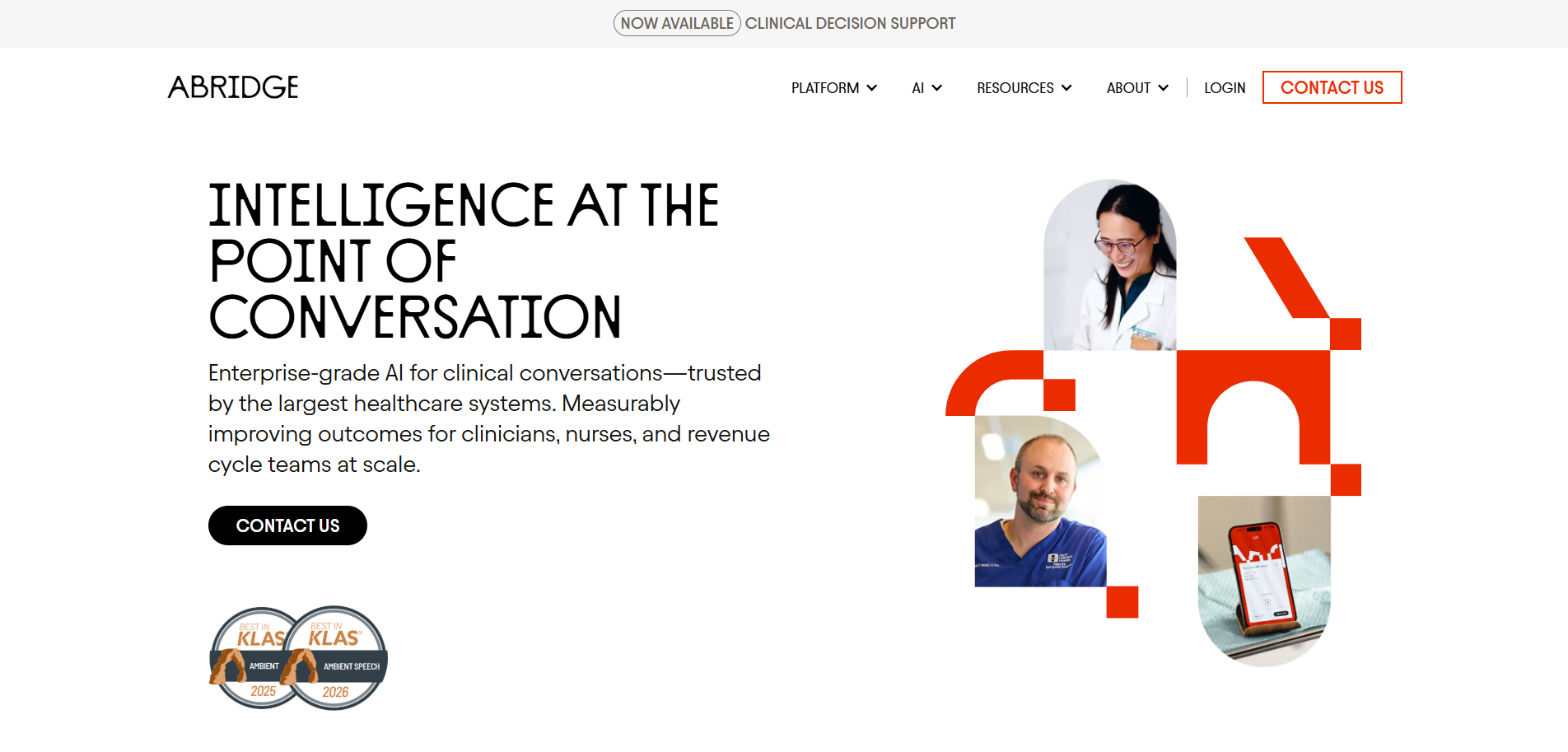
Score: 8.2/10. Strong for documentation impact (9/10). Lower on workflow orchestration (4/10).
Abridge's AI agent listens to doctor-patient conversations and autonomously generates structured clinical notes integrated directly into the EHR. The agent identifies diagnoses, medications, treatment plans, and follow-up instructions from the conversation. Learns individual physician documentation preferences over time.
Best for health systems reducing physician documentation burden and burnout.
Tradeoffs
- Single-task agent (documentation). Does not orchestrate downstream workflows (billing, scheduling, referrals) from the generated notes.
#10. Suki AI: Best Voice-First AI Agent for Clinicians
Score: 8.0/10. Strong for voice interaction (9/10). Lower on multi-agent orchestration (3/10).
Suki AI creates voice AI agents that help physicians capture clinical notes through natural language. Its NLP agents integrate directly with EMRs, allowing clinicians to dictate notes, query patient data, and update charts using voice commands. Suki learns individual physician patterns to improve accuracy over time.
Best for physicians and practices seeking voice-first clinical documentation without changing their workflow.
Tradeoffs
- Voice documentation agent only. Does not cover billing, scheduling, patient communication, or multi-system workflow execution.
#11. Kore.ai: Best Enterprise Agentic AI Platform
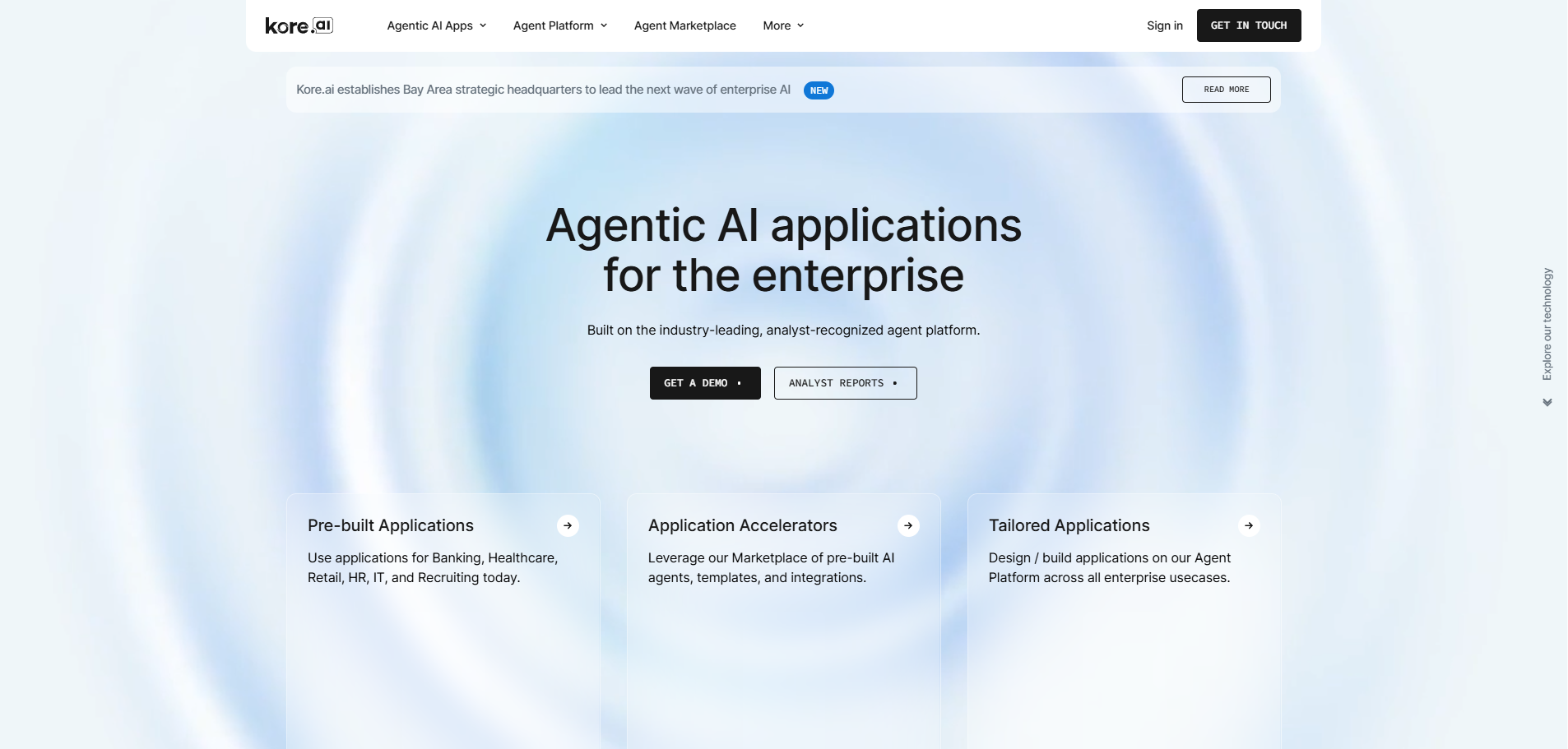
Score: 8.0/10. Highest for enterprise platform breadth (9/10). Lower on healthcare-specific design (5/10).
Kore.ai is a Gartner Magic Quadrant Leader for conversational AI with healthcare-specific agent solutions across patient engagement, member services, and process orchestration. Pre-built agents for appointment scheduling, medication reminders, symptom checks, claims management, and provider inquiries. Supports voice, chat, email, and social channels. HIPAA compliant with BAA.
Best for large health systems and payers needing a multi-channel enterprise AI agent platform with pre-built healthcare use cases.
Tradeoffs
- Enterprise complexity and pricing. Not healthcare-first (serves multiple industries). Custom implementation required for complex workflows.
#12. Aidoc: Best AI Agent for Radiology Triage
Score: 8.0/10. Highest for radiology scale (10/10). Lower on non-imaging capabilities (2/10).
Aidoc's AI agents continuously scan CT, MRI, and X-ray images in real-time across nearly 2,000 hospitals, autonomously flagging critical findings and pushing them to the top of the radiologist's worklist. 50+ FDA-cleared algorithms. The agents also trigger automated care team notifications when critical conditions are detected.
Best for radiology departments with high imaging volumes needing autonomous triage and prioritization.
Tradeoffs
- Radiology-only. Does not address administrative, financial, or patient-facing agent use cases.
#13. Ada Health: Best Patient-Facing Symptom Assessment Agent
Score: 7.8/10. Strong for clinical triage accuracy (9/10). Lower on operational integration (4/10).
Ada Health's AI agent guides patients through structured symptom assessment conversations, using probabilistic reasoning across thousands of conditions to suggest possible diagnoses and appropriate next steps. Multilingual. Enterprise platform integrates with patient portals and triage workflows to direct patients to the right level of care. For more on patient-facing AI, see our guide to AI chatbots in healthcare.
Best for health systems and insurers needing clinical-grade patient triage before appointments or ER visits.
Tradeoffs
- Patient-facing assessment only. Does not execute downstream workflows (scheduling, referral routing, billing) from the triage output.
#14. Beam AI: Best Multi-Agent System for Healthcare Operations
Score: 7.6/10. Strong for multi-agent architecture (8/10). Lower on healthcare-specific depth (5/10).
Beam AI provides a multi-agent system for healthcare management, automating medical record-keeping, billing, compliance, and scheduling. Its pre-built agent library includes agents for customer service, data extraction, and financial operations. Avi Medical partnered with Beam AI to deploy multilingual agents that handled 70% of routine patient inquiries autonomously.
Best for healthcare organizations seeking a multi-agent platform with pre-built agents for operational workflows.
Tradeoffs
- Not healthcare-first (serves multiple industries). Less clinical depth than purpose-built healthcare agent companies.
#15. Thoughtful AI: Best AI Agent for Revenue Cycle Management
Score: 7.4/10. Strong for RCM agent innovation (8/10). Lower on track record and breadth (5/10).
Thoughtful AI builds autonomous AI agents for specific RCM tasks: eligibility verification, claims submission, payment posting, and denial management. Each agent handles a complete workflow end-to-end rather than just assisting a human worker. For more on RCM automation, see our guide to healthcare revenue cycle automation.
Best for RCM teams seeking autonomous AI agents for specific billing and claims workflows.
Tradeoffs
- Newer company with limited public reviews. Focused on RCM; does not address clinical or patient-facing agent use cases.
Questions to Ask Before Choosing an AI Agent Company for Healthcare
1. Agentic maturity
Does the agent just generate outputs (notes, codes, answers), or does it execute across systems (update the EHR, trigger billing, notify the care team)?
2. HIPAA compliance
Is the agent infrastructure HIPAA compliant? Does the vendor sign a BAA? Where is PHI processed and stored?
3. Integration depth
Does the agent connect to your specific EHR and operational tools? Or does each integration require custom development?
4. Human oversight model
What is the human-in-the-loop design? Where does the agent act autonomously vs. escalate for human review?
5. Production evidence
Is the agent deployed in production healthcare environments? What documented outcomes exist (not demos or pilots)?
6. Multi-agent coordination
If you deploy agents from multiple vendors, how do they coordinate? Who provides the orchestration layer?
7. Total cost
What are the implementation, integration, training, and per-transaction costs beyond the subscription?
Key Features to Look for in Healthcare AI Agents
Multi-Step Execution Across Systems
The defining capability of an AI agent versus a traditional AI tool is autonomous execution across multiple systems. An agent that generates a clinical note but cannot update the EHR, trigger billing, and schedule a follow-up is a copilot, not an agent. Orchestration platforms like Keragon provide the execution layer that connects agent outputs to 300+ downstream systems.
HIPAA-Compliant Agent Infrastructure
Every component of the agent stack that touches PHI must be HIPAA compliant: the model, the data pipeline, the execution layer, and the receiving systems. Purpose-built healthcare platforms provide this end-to-end. For more on compliance requirements, see our guide to HIPAA-compliant workflow automation software.
EHR and Clinical System Integration
Agents need to read from and write to EHRs, billing systems, scheduling tools, and lab systems. Pre-built connectors dramatically reduce deployment time. FHIR/HL7 support ensures compatibility with both modern and legacy healthcare systems.
Explainability and Audit Trails
Healthcare AI agents must provide audit trails for every action taken: what data was accessed, what decision was made, what system was updated, and when. This is essential for compliance, quality assurance, and clinical governance.
Graceful Escalation to Humans
Every healthcare AI agent must have a clear, reliable path to human escalation for complex, ambiguous, or high-risk situations. The escalation should include full conversation context so the human does not start from scratch.
Which AI Agent Company Is Right for Your Healthcare Organization?
- Need to orchestrate AI agent workflows across EHRs, billing, and scheduling: Keragon. MCP layer + 300+ integrations + no-code builder.
- Need patient-facing voice agents for outreach and follow-up: Hippocratic AI. Safety-first, clinician-designed.
- Need to automate patient check-in, intake, and scheduling: Notable Health. 90% check-in time reduction.
- Need conversational AI across chat, voice, and SMS: Hyro. Adaptive, no manual intent training.
- Need autonomous diagnostic imaging analysis: Qure.ai (global, 100+ countries) or Aidoc (U.S., 2,000 hospitals).
- Need multi-agent clinical workflow automation: Sully.ai. Modular agents for intake, coding, billing, triage.
- Need time-critical care coordination agents: Viz.ai. FDA-cleared stroke detection + automated team alerting.
- Need ambient clinical documentation: Abridge (health systems) or Suki AI (voice-first, individual physicians).
- Need enterprise-scale multi-channel AI agents: Kore.ai. Gartner Leader, pre-built healthcare agents.
- Need autonomous RCM agents: Thoughtful AI. End-to-end agents for eligibility, claims, denials.
Is Keragon Worth It for Healthcare AI Agent Orchestration?
Single-task AI agents (Abridge, Suki, Qure.ai): Choose if your primary need is one specific task (documentation, imaging, voice notes). These agents excel at their specialty but do not connect outputs to downstream systems.
Enterprise AI agent platforms (Kore.ai, Beam AI): Choose if you are a large organization that wants a multi-channel agent builder with pre-built use cases. Enterprise complexity and pricing. Not healthcare-first.
Clinical multi-agent systems (Sully.ai, Notable Health): Choose if you need AI agents that automate specific clinical and administrative workflows end-to-end within their scope.
Keragon: Choose if you need the orchestration layer that connects AI agents to your EHR, billing, scheduling, and communication systems. Keragon does not replace the AI agents above; it makes them operational by handling the execution and data routing across 300+ healthcare tools with HIPAA + SOC 2 Type II compliance. From $99/month. Start with a free 14-day trial.
Frequently Asked Questions
What are AI agent companies in healthcare?
AI agent companies in healthcare build autonomous software systems that can reason, plan, and execute multi-step tasks across clinical, administrative, and patient-facing healthcare workflows. Unlike traditional AI tools that analyze data and present results, AI agents take action: updating EHRs, submitting claims, scheduling appointments, alerting care teams, and communicating with patients autonomously.
What is the difference between an AI agent and an AI tool in healthcare?
An AI tool performs a specific analytical task (analyzing an image, generating text, predicting risk) and presents results for human action. An AI agent goes further: it autonomously executes multi-step workflows, interacts with multiple systems, makes contextual decisions, and takes action without waiting for human intervention at each step. The difference is execution autonomy.
What are the best AI agent companies for healthcare in 2026?
The top AI agent companies for healthcare in 2026 include Keragon (workflow orchestration), Hippocratic AI (patient-facing voice agents), Notable Health (patient access), Hyro (conversational AI), Qure.ai (diagnostic imaging), Sully.ai (multi-agent clinical workflows), Viz.ai (care coordination), Abridge (clinical documentation), Suki AI (voice documentation), and Kore.ai (enterprise AI platform). For the full list and comparison, see the table above. For a broader view, see our guide to healthcare automation companies.
Are healthcare AI agents HIPAA compliant?
Not all healthcare AI agents are HIPAA compliant by default. Healthcare-specific companies (Keragon, Hippocratic AI, Notable Health, Hyro) are built with HIPAA compliance. General-purpose AI agent platforms may require specific configuration. Always verify BAA availability, PHI handling architecture, and SOC 2 certification before deploying any agent that touches patient data. See our guide to HIPAA-compliant workflow automation.
How do AI agents integrate with EHR systems?
AI agents integrate with EHRs through FHIR/HL7 APIs, vendor-specific APIs (Epic, Oracle Health), and middleware platforms. Orchestration platforms like Keragon provide pre-built EHR connectors (Athenahealth, DrChrono, Elation, Healthie, ModMed) that handle authentication, data mapping, and bi-directional sync. For more, see our guide to EHR API integration.
Can AI agents replace healthcare workers?
No. AI agents in healthcare automate routine, repetitive, and rule-heavy tasks (data entry, scheduling, coding, claim submission, patient outreach). They do not replace clinical judgment, patient relationships, or complex decision-making. Every credible healthcare AI agent includes human escalation paths for complex or high-risk situations. The goal is to free healthcare workers from administrative burden so they can focus on patient care.
What is the MCP protocol and why does it matter for healthcare AI agents?
MCP (Model Context Protocol) is an open standard that allows AI agents to securely connect to external tools and data sources. In healthcare, MCP enables AI agents to access EHRs, billing systems, and scheduling tools through a standardized, HIPAA-compliant interface. Keragon's MCP layer connects AI agents to 300+ healthcare integrations, providing the secure execution infrastructure that agents need to operate in production healthcare environments.
How much do healthcare AI agents cost?
Pricing varies by category. Workflow orchestration platforms (Keragon) start at $99/month. Patient-facing agents (Ada Health) offer free consumer tiers. Enterprise platforms (Kore.ai, Notable Health, Hippocratic AI, Hyro) use custom pricing based on volume. Clinical AI agents (Aidoc, Qure.ai, Viz.ai, Abridge) use enterprise pricing. RCM agents (Thoughtful AI) use custom pricing. Factor in integration, implementation, and training costs.