AI in Healthcare
20 mins
9 Cohere Health Alternatives for Prior Authorization & Utilization Management (2026)
Summary
Your Competitors Are Embracing AI – Are You Falling Behind?
Cohere Health has earned its position as a leader in AI-powered prior authorization and utilization management for health plans. Its Cohere Connect APIs and Cohere Unify clinical intelligence platform support 47 million payer-provider interactions a year, according to the company's own figures. Humana anchors its customer list, and it's raised roughly $196 million to build clinical-grade decisioning AI.
But for many organizations evaluating the category in 2026, the Cohere Health alternatives search is real.
The recurring drivers are consistent: Cohere sells to health plans, so providers only encounter it through the payers that adopted it; implementations run up to six months; pricing is enterprise and custom; and the platform decides authorizations rather than automating the surrounding workflow that consumes most staff time.
A quick disambiguation is also in order, because searches for cohere alternatives split two ways: Cohere Health, the Boston healthcare company covered in this guide, is unrelated to Cohere, the enterprise LLM company.
The regulatory clock sharpens the search. The CMS Interoperability and Prior Authorization Final Rule (CMS-0057-F) took operational effect on January 1, 2026, mandating 72-hour decisions on expedited requests, 7-calendar-day decisions on standard requests, and specific denial reasons, with FHIR-based Prior Authorization APIs required by January 1, 2027 (CMS).
Every payer and every provider organization now needs a credible answer for electronic prior authorization, and the tools are split cleanly by which side of the transaction they serve.
This guide compares 9 Cohere Health alternatives across payer-side decisioning, provider-side workflow automation, transparency and auditability, integration depth, pricing accessibility, and CMS-0057-F readiness.
Each option is scored on the same weighted criteria, so health plan UM leaders, provider operations teams, and digital health builders can match their actual constraints to the right platform.
A note on category framing. Most of the alternatives below are payer-side platforms competing directly with Cohere Health on utilization management decisioning: Availity AuthAI, Myndshft, XSOLIS, and Itiliti Health are the most credible direct alternatives for health plans. Others serve the provider side of the same transaction: Optum, R1, CoverMyMeds, and Waystar.
One option, Keragon, is positioned differently.
Keragon isn't a UM decisioning engine; it's the HIPAA-compliant automation platform for the provider side of prior authorization, the eligibility checks, packet preparation, status chasing, documentation, and follow-up that consume practice staff hours regardless of which decisioning platform the payer runs.
For provider organizations and digital health teams whose bottleneck is the workflow rather than the clinical decision, Keragon is the automation option.
Cohere Health Alternatives Comparison & Ratings Chart
The table below summarizes the nine alternatives, the side of the prior authorization transaction each serves, the use case each fits best, pricing, and our weighted score.
Pricing and capability details are accurate as of mid-2026 and change frequently; confirm current terms directly with each vendor.
| Platform | Side | Best For | Key Differentiator | Pricing | Score |
|---|---|---|---|---|---|
| Keragon | Provider | PA workflow automation without code | 400+ integrations; AI agents; BAA on every paid plan | From $149/mo; free trial | 9.3 |
| Availity AuthAI | Payer | Transparent, auditable decisioning | Recommendations in under 90 seconds; no auto-deny | Enterprise custom | 8.6 |
| Myndshft | Both | End-to-end medical + pharmacy PA | Rules for 600+ payers; self-learning engine | Custom | 8.2 |
| XSOLIS | Both | Payer-provider UM alignment | AI medical-necessity scoring shared across both sides | Enterprise custom | 8.0 |
| Itiliti Health | Payer | Medical policy management | Policy digitization and PA automation for plans | Custom | 7.8 |
| Optum | Provider | Enterprise provider auth at scale | 96% first-pass approval rate (company-reported) | Enterprise custom | 7.8 |
| R1 | Provider | Health-system auth operations | 68% of orders cleared within an hour (company-reported) | Enterprise custom | 7.6 |
| CoverMyMeds | Provider | Free pharmacy PA network | Broad payer-provider network at no provider cost | Free for providers | 7.2 |
| Waystar | Provider | RCM-suite auth module | Authorization inside a full revenue cycle platform | Custom | 7.0 |
9 Best Cohere Health Alternatives in 2026
The alternatives below are organized by the decision that drives the platform choice: payer-side clinical decisioning, provider-side workflow automation, transparency requirements, pharmacy coverage, revenue cycle integration, or accessibility for smaller organizations.
Each entry covers product overview, pros and cons, pricing, setup, and tradeoffs.
#1. Keragon: Best Cohere Health Alternative for Provider-Side Prior Authorization Workflow Automation
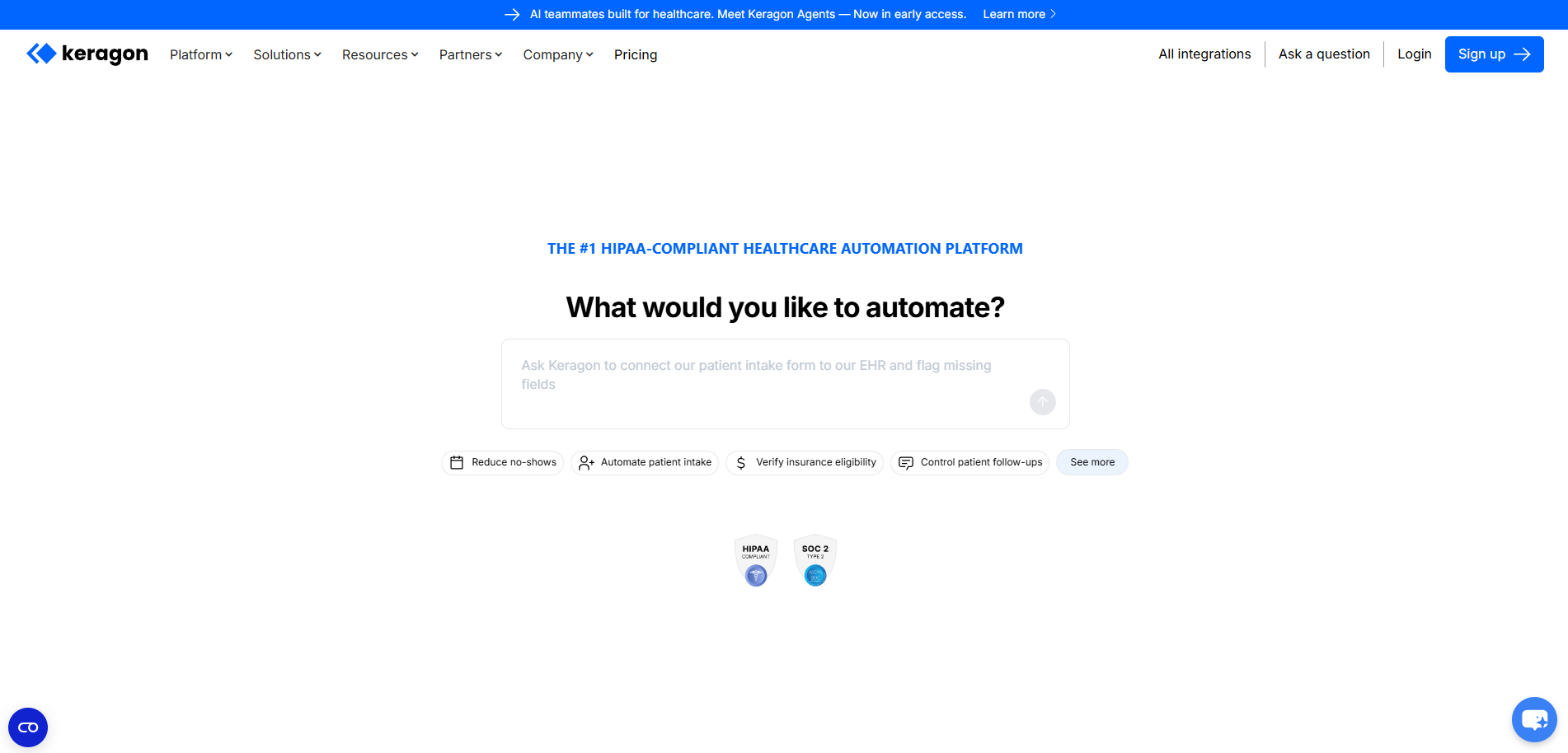
Keragon isn't a like-for-like replacement for Cohere Health. Cohere Health decides authorizations for health plans; Keragon automates the provider-side workflow around them.
For hospitals, practices, and digital health companies, that workflow is where the hours actually go: checking eligibility, assembling clinical documentation, submitting requests, chasing statuses across payer portals, updating the EHR, and notifying the care team when the decision lands.
The burden is documented. The American Medical Association's survey work ties prior authorization to roughly 13 hours of physician and staff time per week, with 40 percent of practices employing staff dedicated exclusively to it (AMA), and the CAQH Index estimates more than $20 billion a year in industry savings from automating the remaining manual transactions (CAQH).
Keragon attacks exactly that layer.
Score: 9.3/10. Highest marks for provider-side workflow automation (10/10), integration breadth (10/10), HIPAA posture (10/10), and time to value (9/10).
Scored lower on payer-side clinical decisioning (not offered) and public review volume (7/10), typical for a healthcare-specific platform.
Product Overview
Keragon is a HIPAA-compliant, SOC 2 Type II healthcare automation platform with a no-code visual builder and AI agents.
For prior authorization, teams automate the full provider-side loop: an order or referral triggers the workflow, the Insurance Verification agent confirms eligibility and benefits in real time, documentation is assembled from the EHR and intake data, the request is routed for submission, statuses are polled and chased automatically, and the outcome is written back to the EHR with the care team notified, all described in plain English rather than code.
Beyond prior authorization, the same platform runs the adjacent front-office workflows: patient intake, appointment reminders, no-show recovery, and referral routing.
Human-review checkpoints, scope-locked tools, and a HIPAA audit log keep staff in control of every step that matters, and zero AI data retention keeps PHI out of model training.
Pricing
Keragon uses tiered pricing with a 14-day free trial and a signed BAA on every paid plan:
- Starter: $149/month ($99/month billed annually), 200 workflow runs/month, 3 published workflows.
- Professional: $399/month, 2,000 workflow runs/month, 15 published workflows.
- Scale Up: $1,499/month, 20,000 workflow runs/month, 100 published workflows.
- Enterprise: custom pricing with custom volume, custom BAA terms, and a dedicated account manager.
Published pricing is a structural contrast with this category, where every other platform on this list is quoted. Confirm current plans on the Keragon pricing page.
Integrations
400+ healthcare integrations spanning EHR and practice management systems (Athenahealth, DrChrono, Elation Health, ModMed, Healthie), schedulers, billing, forms, CRM, and communication tools, plus a universal HTTP connector for any API and HL7/FHIR support. A secure MCP layer lets AI agents act across those integrations under HIPAA-compliant controls. Explore the integrations.
Setup
Hours, not months. Sign the BAA, connect your EHR and tools, describe the workflow in plain English, test on real cases, and go live with review checkpoints where judgment matters. Most teams ship their first workflow within an afternoon, against typical enterprise PA platform implementations measured in months.
Pros and Cons
Pros:
- Automates the provider-side PA workflow end to end: eligibility, documentation, submission routing, status chasing, EHR writeback, and notifications.
- HIPAA-compliant by default: SOC 2 Type II, signed BAA on every paid plan, zero AI data retention.
- 400+ healthcare integrations plus a universal connector; no engineering required.
- Published, accessible pricing with a free trial, in a category of six-figure enterprise quotes.
- Human-review checkpoints and audit logs on every workflow.
Cons:
- Not a UM decisioning engine: it does not make or recommend clinical authorization decisions.
- Healthcare-only by design, so not a fit outside the industry.
- Reviewers note a learning curve on the most complex multi-branch automations.
Tradeoffs
Choose Cohere Health, Availity AuthAI, or XSOLIS when you're a health plan that needs clinical decisioning on authorization requests.
Choose Keragon when you're a provider organization or digital health company whose prior authorization pain is the workflow: the hours spent on eligibility, packets, portals, and follow-up. The two layers are complementary, and many provider teams run Keragon regardless of which decisioning platform their payers use.
Support
24/7 live chat and help desk, a documentation hub, an active user community, and a directory of certified automation experts for hands-on implementation, with healthcare-specific onboarding on enterprise plans.
Mini Case Study
A representative pattern from multi-specialty practices: the referral coordinator was spending mornings on payer portals, checking authorization statuses by hand.
Rebuilt on Keragon, the workflow now verifies eligibility the moment an order is placed, assembles the documentation packet from the EHR, flags incomplete requests for human review, polls statuses automatically, and writes approvals back to the chart with the scheduler notified. The coordinator reviews exceptions instead of processing everything.
Pre-built templates. HIPAA compliant. No developers needed. Start your free trial today.
#2. Availity AuthAI: Best Cohere Health Alternative for Transparent Payer-Side Decisioning

Availity AuthAI is the strongest direct alternative for health plans that want explainable, auditable AI on authorization decisions.
Score: 8.6/10. Highest marks for decision transparency (10/10), speed (9/10), and CMS-0057-F readiness (9/10).
Scored lower on provider-direct access (5/10, providers reach it through their plans) and pricing transparency (4/10).
Product Overview
AuthAI is a payer-focused recommendation engine that grounds its analysis in codified medical policy and the patient's clinical data rather than historical prediction.
Most submissions with complete clinical information receive a recommendation in under 90 seconds; every recommendation is traceable to the policy logic behind it, and the system explicitly doesn’t auto-deny, which keeps clinicians in control of adverse decisions.
Built on Availity's network position connecting payers and providers, it’s designed for CMS-0057-F compliance.
Pros and Cons
Pros:
- Transparent, auditable recommendations rather than black-box decisions.
- Sub-90-second recommendations on complete submissions.
- No auto-deny by design, which matters for regulatory and denial-bias scrutiny.
Cons:
- Payer-side product; providers access it only through participating health plans.
- Enterprise custom pricing.
- A recommendation engine, not a full UM operating suite like Cohere's Unify platform.
Pricing
Enterprise SaaS, quoted. Contact Availity.
Setup
Enterprise payer implementation is typically a multi-month project with integration into UM workflows.
Tradeoffs
Choose Availity AuthAI when explainability and auditability are procurement requirements for payer-side AI.
Choose Cohere Health when you want a broader UM suite with delegated specialty management.
Choose Keragon when the problem is provider-side workflow automation rather than payer decisioning.
#3. Myndshft: Best Cohere Health Alternative for End-to-End Medical and Pharmacy PA
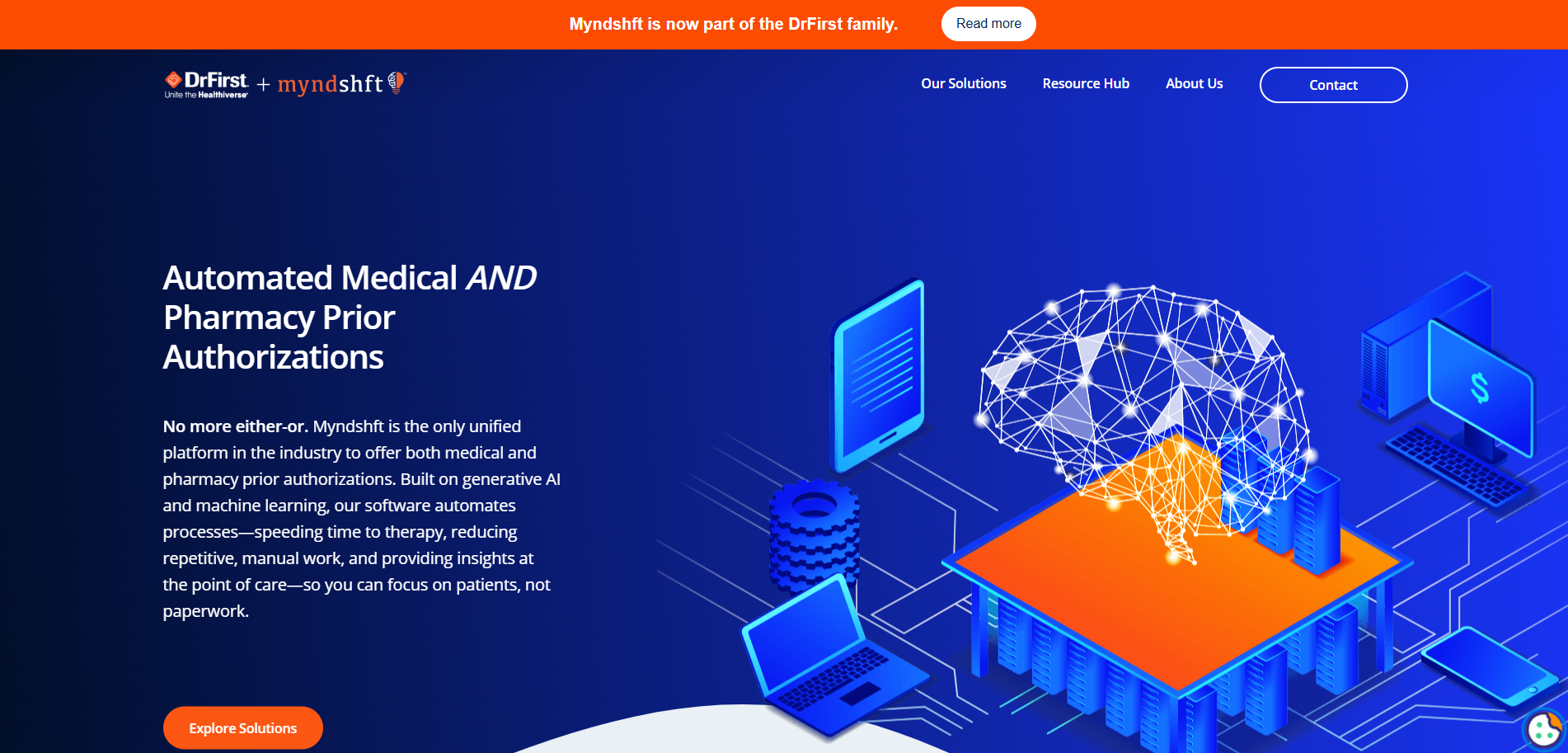
Score: 8.2/10. Strongest for unified medical plus pharmacy coverage (9/10) and payer-rule breadth (9/10).
Scored lower on enterprise clinical decisioning depth versus Cohere (6/10) and pricing transparency (4/10).
Product Overview
Myndshft handles both medical and pharmacy prior authorizations in one platform, maintaining rules for more than 600 payers with a self-learning engine that adapts as payer policies change.
It markets an end-to-end flow (real-time benefit verification, automated determination, documentation assembly, and submission) and reports reducing total workflow time from roughly 50 minutes to under 5.
It works with providers directly as well as payers, and embeds into EHRs, revenue cycle systems, and health information exchanges.
Pros and Cons
Pros:
- Medical and pharmacy PA in one platform, which most rivals split.
- Rules maintained for 600+ payers with self-learning policy updates.
- Direct provider access, not payer-gated.
Cons:
- Custom pricing.
- Less depth in payer-side clinical review workflows than Cohere or XSOLIS.
- Smaller public review footprint than the enterprise incumbents.
Pricing
Custom. Contact Myndshft.
Setup
EHR or network integration; timelines vary from weeks to a few months by footprint.
Tradeoffs
Choose Myndshft when you need medical and pharmacy authorization unified in one system with broad payer coverage.
Choose Availity AuthAI when payer-side transparency is the priority.
Choose Keragon when you want the surrounding workflow (eligibility, documentation, statuses, EHR writeback) automated across your whole stack, not just the PA transaction.
#4. XSOLIS: Best Cohere Health Alternative for Payer-Provider UM Alignment

Score: 8.0/10. Strongest for shared medical-necessity intelligence across payers and providers (9/10) and utilization review depth (8/10).
Scored lower on pricing transparency (4/10) and small-organization fit (4/10).
Product Overview
XSOLIS applies AI-driven medical-necessity scoring to utilization management, giving payers and providers a shared, continuously updated view of patient status rather than adversarial reviews.
Its platform is used across health plans and hospital UM teams to align level-of-care decisions, reduce peer-to-peer friction, and focus clinical reviewers on the cases that genuinely need judgment.
Pros and Cons
Pros:
- A shared intelligence model that reduces payer-provider review friction.
- Strong utilization review focus, especially for inpatient status decisions.
- Established across both sides of the UM transaction.
Cons:
- Enterprise custom pricing and enterprise-weighted implementations.
- Centered on utilization review rather than the full PA intake-to-decision pipeline.
- Not a fit for small practices.
Pricing
Enterprise custom. Contact XSOLIS.
Setup
Enterprise implementation with clinical data integration; measured in months.
Tradeoffs
Choose XSOLIS when payer-provider alignment on medical necessity is the core problem.
Choose Cohere Health for a broader prior authorization suite with specialty programs.
Choose Keragon when the bottleneck is operational workflow on the provider side rather than clinical review alignment.
#5. Itiliti Health: Best Cohere Health Alternative for Payer Medical Policy Management

Score: 7.8/10. Strongest for medical policy digitization (9/10) and payer PA automation focus (8/10).
Scored lower on breadth beyond policy and PA (5/10) and public footprint (5/10).
Product Overview
Itiliti Health focuses on the payer's upstream problem: digitizing medical policy so that prior authorization can be automated against it.
Its products cover medical policy management, PA requirement lookup, and automation of the determination itself, making it a focused alternative for plans whose blocker is unstructured policy rather than review capacity.
Pros and Cons
Pros:
- Purpose-built for turning medical policy into machine-readable automation.
- Focused payer PA scope rather than a sprawling suite.
- Complements CMS-0057-F API work, which depends on codified policy.
Cons:
- Narrower than Cohere's end-to-end UM platform.
- Custom pricing.
- Payer-side only.
Pricing
Custom. Contact Itiliti Health.
Setup
Policy digitization and integration project; timeline scales with policy volume.
Tradeoffs
Choose Itiliti when codifying medical policy is the prerequisite that’s blocking your PA automation.
Choose Cohere Health or Availity AuthAI for fuller decisioning platforms.
Choose Keragon when the provider-side workflow is where the hours are going.
#6. Optum: Best Cohere Health Alternative for Enterprise Provider Authorization at Scale
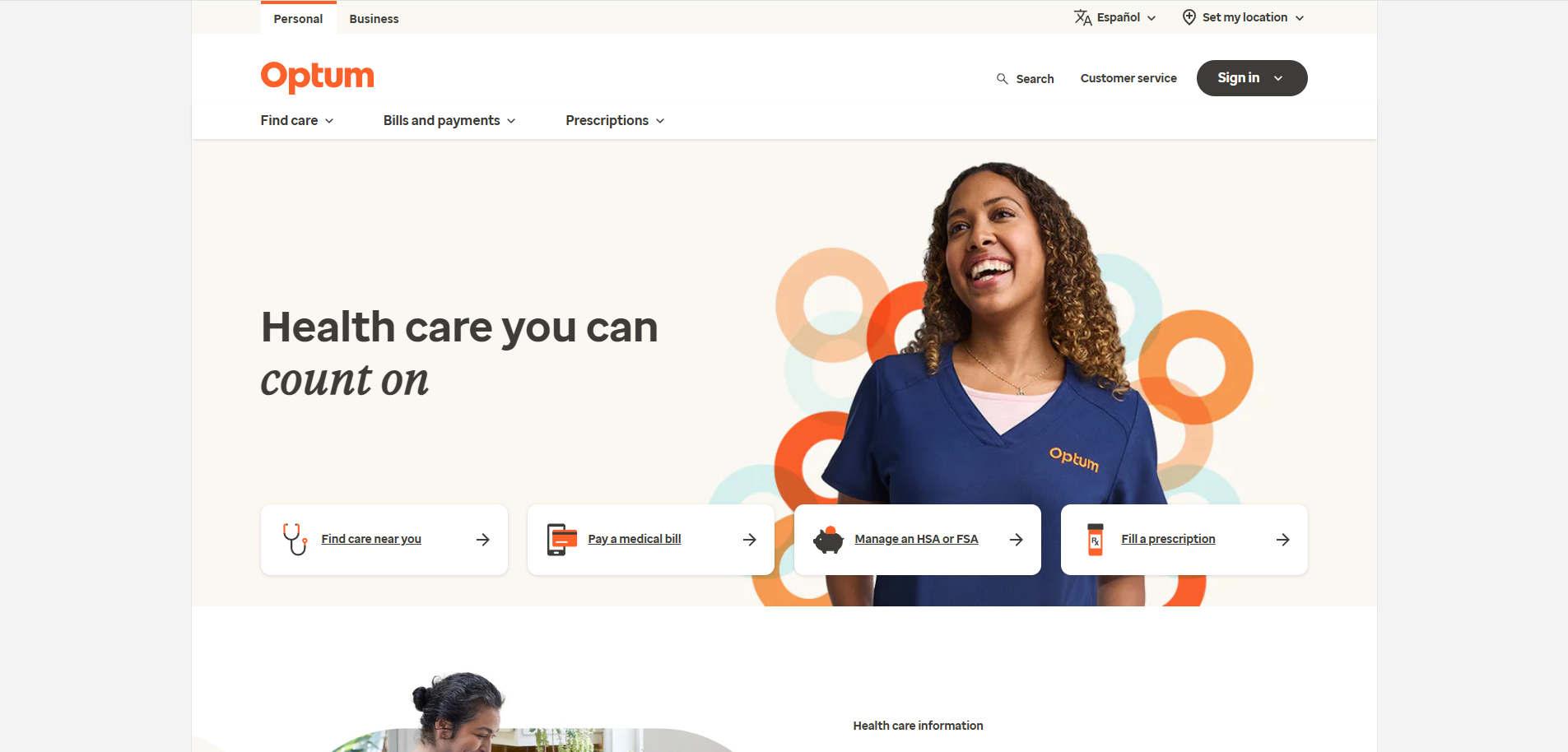
Score: 7.8/10. Strongest for provider-side scale (9/10) and RCM ecosystem depth (9/10).
Scored lower on pricing accessibility (3/10) and vendor-neutrality considerations (5/10, given Optum's payer affiliation).
Product Overview
Optum's authorization automation (Digital Auth Complete) handles determination, documentation, submission, and status tracking for provider organizations at enterprise scale, and the company reports a 96 percent first-pass approval rate.
It sits inside Optum's broader revenue cycle and clinical ecosystem, which is a strength for organizations already standardized there.
Pros and Cons
Pros:
- Enterprise-proven provider auth automation with strong reported first-pass rates.
- Deep integration with Optum's RCM stack.
- Scale credibility for large health systems.
Cons:
- Enterprise pricing and procurement weight.
- Some organizations weigh Optum's UnitedHealth affiliation in vendor selection.
- Heavy for independent practices.
Pricing
Enterprise custom. Contact Optum.
Setup
Enterprise implementation, typically integrated with existing Optum or EHR infrastructure over months.
Tradeoffs
Choose Optum when you’re a large health system wanting auth automation inside an enterprise RCM relationship.
Choose R1 for a comparable operations-led alternative.
Choose Keragon when you want provider-side automation you can deploy yourself in days, at published pricing, across your existing tools.
#7. R1: Best Cohere Health Alternative for Health-System Authorization Operations

Score: 7.6/10. Strongest for auth operations outcomes (9/10) and RCM integration (8/10).
Scored lower on pricing accessibility (3/10) and fit below health-system scale (4/10).
Product Overview
R1's prior authorization solution combines automation with managed operations for hospitals and large physician groups, reporting that 68 percent of orders clear within an hour and nearly 97 percent within a day, with authorization-related denial rates under 1 percent.
It’s a strong fit where authorization is treated as a revenue cycle operations problem to be run at scale.
Pros and Cons
Pros:
- Strong reported outcomes on clearance speed and auth-related denials.
- Automation plus managed operations, not software alone.
- Built for hospital-scale volume.
Cons:
- Enterprise custom pricing.
- Operations-outsourcing model is more than smaller organizations need.
- Less self-serve control than a workflow platform.
Pricing
Enterprise custom. Contact R1.
Setup
Enterprise onboarding integrated with revenue cycle operations; months.
Tradeoffs
Choose R1 when you want authorization to run as a managed, measured operation at health-system scale.
Choose Optum for the ecosystem-integrated equivalent.
Choose Keragon when your team wants to keep the work in-house and automate it directly, without an outsourcing contract.
#8. CoverMyMeds: Best Free Cohere Health Alternative for Pharmacy Prior Authorization
Score: 7.2/10. Strongest for network breadth (9/10) and provider accessibility (9/10, free).
Scored lower on medical-benefit PA depth (4/10) and workflow automation beyond the PA transaction (4/10).
Product Overview
CoverMyMeds is the widely adopted network for electronic prior authorization, strongest in pharmacy PA, connecting providers, payers, and pharmacies at no cost to providers.
For practices whose PA volume is dominated by medications, it’s the default starting point and often already embedded in the EHR.
Pros and Cons
Pros:
- Free for providers, with broad payer and pharmacy connectivity.
- Often pre-integrated in major EHRs.
- Fast start for pharmacy-heavy PA volume.
Cons:
- Pharmacy-centric; medical-benefit PA is not the strength.
- Automates the transaction, not the surrounding workflow.
- Network model means capabilities vary by payer participation.
Pricing
Free for providers; payer and pharma-funded model.
Setup
Days, especially where the EHR integration already exists.
Tradeoffs
Choose CoverMyMeds when pharmacy PA volume is the problem and the budget is zero.
Choose Myndshft when you need medical and pharmacy together.
Choose Keragon when the drug PA transaction is fine, but everything around it (eligibility, documentation, statuses, EHR updates) still runs by hand.
#9. Waystar: Best Cohere Health Alternative Inside a Revenue Cycle Suite

Score: 7.0/10. Strongest for RCM-suite consolidation (8/10) and claims-to-auth continuity (8/10).
Scored lower on PA-specific AI depth (5/10) and pricing transparency (4/10).
Product Overview
Waystar offers authorization management as part of its healthcare revenue cycle platform, covering auth determination, submission, and status tracking alongside eligibility, claims, and payments.
It’s the consolidation play: one RCM vendor, with authorization handled inside it.
Pros and Cons
Pros:
- Authorization inside a full RCM platform, reducing vendor count.
- Continuity from eligibility through claims and denials.
- Established mid-market and enterprise base.
Cons:
- Auth is a module, not the product's center of gravity.
- Custom pricing.
- Less AI decisioning depth than PA-specialist platforms.
Pricing
Custom, typically bundled with broader RCM contracts.
Setup
Weeks to months as part of RCM implementation.
Tradeoffs
Choose Waystar when you’re consolidating revenue cycle vendors and want auth included.
Choose a PA specialist when authorization is the acute problem.
Choose Keragon when you want auth workflow automation that connects across your existing RCM, EHR, and communication stack without replatforming.
Why Choose Cohere Health Alternatives
Here are the top reasons for choosing Cohere Health alternatives in 2026.
Provider-side control instead of payer-gated access
Cohere Health is sold to health plans, so providers experience it only where their payers deployed it.
Provider organizations that want to fix their own authorization workload need tools they control: Keragon for workflow automation, Optum or R1 for enterprise operations, and CoverMyMeds for pharmacy.
Transparency and auditability of AI decisions
Regulators and clinicians increasingly demand explainable authorization AI.
Availity AuthAI's traceable, no-auto-deny recommendation model is the category's clearest answer, and it is a primary reason plans evaluate alternatives.
CMS-0057-F compliance on your timeline
With operational mandates live since January 1, 2026, and FHIR Prior Authorization APIs required by January 1, 2027 (CMS), plans need vendors whose compliance roadmap matches theirs, and providers benefit from tools built for the electronic-PA world the rule creates.
Medical plus pharmacy coverage in one platform
Cohere's center of gravity is medical-benefit UM. Organizations whose pain spans drug and medical authorizations look to Myndshft's unified coverage or pair CoverMyMeds with a medical-side tool.
Accessibility for smaller organizations
Six-month implementations and enterprise contracts exclude most practices and digital health startups.
Published pricing, free trials, and self-serve setup (Keragon's model) open the category below the enterprise tier.
Workflow automation beyond the decision
A fast authorization decision still leaves eligibility checks, documentation assembly, status chasing, EHR writeback, and patient communication. That surrounding workflow is where most staff time goes, and it’s a different product category from decisioning.
How to Choose the Right Cohere Health Alternative
Following these steps can help ensure you choose the right Cohere Health alternative for your organization.
Step 1: Identify which side of the transaction you’re on
Health plans need decisioning and policy platforms (Availity AuthAI, XSOLIS, Itiliti, or Cohere itself). Provider organizations need workflow and operations tools (Keragon, Optum, R1, CoverMyMeds, Waystar). Myndshft and XSOLIS straddle both.
This one question eliminates half the market.
Step 2: Map where the hours actually go
Audit two weeks of PA work: how much time is determination and clinical review versus eligibility, documentation, submission, and follow-up?
Buy decisioning if review is the bottleneck; buy workflow automation if the surrounding process is.
Step 3: Verify compliance posture in writing
For any tool touching PHI, require a signed business associate agreement (see the HHS sample BAA provisions), encryption, access controls, and audit logs.
For payer platforms, add CMS-0057-F readiness: decision-time SLAs, denial-reason specificity, and the FHIR API roadmap.
Step 4: Test integration depth against your actual stack
Ask for a live demonstration against your EHR and payer mix, and confirm two-way writeback rather than portal-only access.
A tool that cannot update your chart just creates a second queue.
Step 5: Model the total cost at your volume, then pilot
Enterprise quotes, implementation fees, and per-transaction charges compound differently than flat platform tiers.
Model year-one and year-two cost at real volume, then pilot one high-volume authorization type end-to-end before standardizing.
Key Features to Look for in Cohere Health Competitors
When weighting up Cohere health alternatives, look out for the following key features.
Explainable AI with human control
Traceable recommendations, no auto-deny on adverse decisions, and human review on the cases that need judgment.
Real-time eligibility and benefits verification
Coverage confirmed at order time, not discovered at denial time.
Automated documentation assembly
Clinical evidence extracted from the EHR and attachments, pre-populated into requests rather than retyped.
Status tracking and automated follow-up
Automated polling across payer portals with escalation on stalls, the single biggest manual time sink.
FHIR-based connectivity and EHR writeback
Da Vinci-aligned APIs on the payer side; two-way EHR integration on the provider side, so outcomes land in the chart.
HIPAA compliance with a signed BAA
Non-negotiable for every component in the chain, ideally backed by SOC 2 Type II.
Cost Comparison: Cohere Health vs. Alternatives
Most of this category is enterprise-quoted; the real comparison is accessibility and cost structure.
- Cohere Health: enterprise custom for health plans; implementations typically up to six months.
- Keragon: published tiers from $149/month (Starter), $399/month (Professional), $1,499/month (Scale Up), Enterprise custom; 14-day free trial; BAA on every paid plan.
- Availity AuthAI: enterprise SaaS, quoted; payer-side.
- Myndshft: custom; provider and payer models.
- XSOLIS: enterprise custom.
- Itiliti Health: custom, scoped to policy volume.
- Optum: enterprise custom, often within broader RCM agreements.
- R1: enterprise custom, operations-inclusive.
- CoverMyMeds: free for providers.
- Waystar: custom, bundled with RCM contracts.
Which of the Cohere Health Alternatives Is Right for Your Organization?
- Health plan needing transparent, auditable decisioning: Availity AuthAI.
- Health plan blocked on unstructured medical policy: Itiliti Health.
- Payer or system wanting shared medical-necessity intelligence: XSOLIS.
- Organization needing medical and pharmacy PA unified: Myndshft.
- Health system wanting auth as a managed enterprise operation: Optum or R1.
- Practice with pharmacy-dominated PA volume and no budget: CoverMyMeds.
- Organization consolidating on one RCM vendor: Waystar.
- Provider organization or digital health team automating the PA workflow itself, at published pricing, without engineering: Keragon.
Automate Your Prior Authorization Workflow With Keragon
Whichever platform your payers run, the provider-side workflow is yours to fix.
Keragon is a HIPAA-compliant, SOC 2 Type II healthcare automation platform whose AI agents verify eligibility, assemble documentation, chase statuses, and write outcomes to your EHR, across 400+ integrations, with human-review checkpoints, a signed BAA on every paid plan, and a 14-day free trial. See Keragon Agents, or review the HIPAA compliance details.
FAQs
What is the best Cohere Health alternative in 2026?
It depends on your side of the transaction.
Availity AuthAI is the strongest payer-side alternative for transparent decisioning, Myndshft for unified medical and pharmacy PA, and XSOLIS for payer-provider alignment.
For provider organizations automating the authorization workflow itself, Keragon is the best fit, with published pricing and no-code setup.
Is Cohere Health the same as Cohere, the AI company?
No. Cohere Health is a Boston-based healthcare company that builds prior authorization and utilization management AI for health plans.
Cohere (cohere.com) is an unrelated enterprise large language model company.
If you’re looking for alternatives to the LLM provider, that comparison involves OpenAI, Anthropic, and similar vendors, not the platforms in this guide.
What is the difference between payer-side and provider-side prior authorization tools?
Payer-side platforms (Cohere Health, Availity AuthAI, Itiliti) help health plans decide authorization requests: policy, clinical review, and determinations.
Provider-side tools (Keragon, Optum, R1, CoverMyMeds) help the ordering organization get requests approved: eligibility, documentation, submission, status chasing, and EHR updates.
They automate opposite ends of the same transaction.
Can Keragon work alongside Cohere Health?
Yes, and the pairing is natural. Cohere Health operates on the payer side, deciding requests for the health plans that deploy it.
Keragon automates the provider side of the same transaction: verifying eligibility, assembling documentation, tracking statuses, and writing outcomes to the EHR, regardless of which decisioning platform each payer runs.
What does CMS-0057-F require for prior authorization?
Effective January 1, 2026, impacted payers must decide expedited requests within 72 hours and standard requests within 7 calendar days, and provide specific denial reasons.
FHIR-based Prior Authorization APIs are required by January 1, 2027, with public reporting of PA metrics. The rule covers Medicare Advantage, Medicaid, CHIP, and federally facilitated exchange plans (CMS).
Cohere Health vs Availity AuthAI: what is the difference?
Both serve health plans.
Cohere Health offers a broader UM suite: intake digitization, automated approvals, assistive clinical review, and specialty programs, reporting 47 million payer-provider interactions annually.
Availity AuthAI is a focused recommendation engine emphasizing transparency: traceable logic, sub-90-second recommendations, and no auto-deny.
Plans wanting a full UM platform lean Cohere; plans prioritizing explainability lean Availity.
Are Cohere Health alternatives HIPAA compliant?
The credible ones are, but verify each vendor in writing: a signed business associate agreement, encryption in transit and at rest, role-based access, and audit logs, ideally with SOC 2 Type II.
Keragon includes a signed BAA on every paid plan; enterprise platforms negotiate BAAs within their contracts.
What is the best prior authorization solution for small practices?
Small practices are priced out of enterprise decisioning platforms, so the practical stack is CoverMyMeds for pharmacy PA (free) plus Keragon for the surrounding workflow: eligibility verification, documentation, status tracking, and EHR writeback, from $149 per month with a 14-day free trial and no engineering required.
Does AI prior authorization software auto-deny requests?
The credible platforms do not.
Availity AuthAI explicitly doesn’t auto-deny, Cohere positions its AI for automated approvals with clinician review on complex cases, and regulatory scrutiny of AI denials is rising.
When evaluating any vendor, ask directly whether the system can issue an adverse determination without human review.
How long does it take to implement a Cohere Health alternative?
It varies by category.
Payer-side platforms like Cohere run implementations up to six months.
Enterprise provider solutions from Optum or R1 take months inside RCM programs.
Network tools like CoverMyMeds activate in days where EHR integration exists.
Keragon deploys in hours to days, with most teams shipping their first workflow within an afternoon.
Why is prior authorization automation worth the investment?
The burden is measured: prior authorization consumes roughly 13 hours of physician and staff time per week, per the AMA (AMA); a single manual authorization averages about 24 minutes per the CAQH Index, and the industry could save more than $20 billion a year by automating remaining manual transactions (CAQH).
Automation returns those hours to patient care.


Related Articles