Patient scheduling automation that keeps every provider's schedule full
Requests from web, phone and referrals become booked visits in your EHR. Reminders stop when plans change, cancellations refill by your rules, and no-shows get followed up until they rebook. Keragon runs scheduling on the systems you already use, with your team in control.
Trusted by healthcare teams across the US






Appointment scheduling still runs on phone tag and re-typing
MGMA Stat poll of 236 medical groups, 2026
AMN Healthcare survey of 1,391 physician offices, 2025
MGMA DataDive Practice Operations
The agents that keep the schedule full
Three specialists from the Keragon Agents roster run the job end to end, and clinical review always stays with your team.
Confirmations and reminders that match the calendar
Missed visits get rebooked, not written off
Inquiries become booked visits before interest fades
Common appointment scheduling workflows we automate
Beyond the core agents, the scheduling jobs practices hand to Keragon first.
24/7 appointment management
Rules-based scheduling lets patients book, reschedule or cancel around the clock, in the medium they prefer.
Two-way appointment sync
Clinicians schedule in the EHR, patients book in your scheduling tool, and both stay current without re-typing.
Reminders that stop when plans change
Reminders go out at the intervals you set and prompt patients to confirm, reschedule or cancel. They stop the moment the appointment changes.
Licensing and coverage checks
Cross-check a patient's location against your state licensing before a booking is accepted, and route what falls outside.
Recapture last-minute cancellations
A standby waiting list is notified the moment a slot opens, so late cancellations get filled instead of lost.
Referrals and recalls, booked and closed
A referral is a patient someone already sent you. Keragon makes sure the loop closes: captured, contacted, booked and reported back.
Fewer scheduling calls. A fuller calendar without the phone tag.
From solo practices, large multi-location clinics and all the way up to NASDAQ-listed digital health companies.
"Keragon has been an essential partner as we've grown our practice. The personalized support helped us get systems up and running quickly."

“We used Zapier for many of our integrations, but when it came to working with protected health information we had to find a different solution. Keragon has filled that gap really well! Their team has been great to work with and super helpful in getting our integrations up and running!”

“Thank you for your response. I started using the demo today; it worked so smoothly... I almost shed a tear. HIPAA Automations.... lovely!!!”

“We’re thrilled to share how Keragon is integral to the success of A Smile for Kids and the safety of our patients’ data. This is especially evident as different, internal ASK systems exchange HIPAA protected information. By using Keragon as a trusted integration platform, we have enhanced our operational efficiency and safeguarded patient data at the highest level!”

“And THANK YOU so much for looking into our zip code issue! It worked! That was a simple fix and now we’re having no problems automating customer creation. I can’t thank you enough for the time and support - we’re absolutely thrilled with how our systems are operating with Keragon. It has truly been a game changer!”

“Keragon's support is next level. They take the time to build the connectors and really think through everything with us in a considerate, professional way. We chose our 2.0 tech stack based on software that play nice with Keragon, and that was a really good idea. I feel excited because we now can constantly incrementally improve our operations, and Keragon is the behind the scenes driver of that growth!”

“Keragon is great, but the support is even better. Support is incredibly fast, and you can jump on screen shares for help when needed - this is unheard of. I would highly recommend Keragon for any healthcare organization, big or small, that is looking to connect their systems and automate their workflows using a very intuitive yet super powerful solution. ”

“I like how easy it is to build complex EMR integrations with Aesthetix CRM. Using the Keragon connectors, we have now integrated multiple EMRs, including ModMed. We are excited about the future of building HIPAA-compliant integrations for our customers with Keragon.”
.png)
“We use a few different systems which leads to a lot of repeating the same steps in each platform. Keragon automated a lot of this for us. Now we can enter information in one place and it will update/add in every platform. The Keragon setup is not easy, but the support is great. I'd highly recommend to practices who use different platforms for patient care.”

“Keragon successfully recreates a similar UI/UX and workflow to other top automation platforms like Zapier and IFTTT. The key difference is that it's one of the few that is HIPAA compliant across a wide range of tools. The team there has done a great job prioritizing the right features. As an automations consultant, I'm able to create the majority of the workflows I need, and find reasonable workarounds (such as using webhooks) to create the rest of them.”

Built to run the schedule, never to make clinical calls
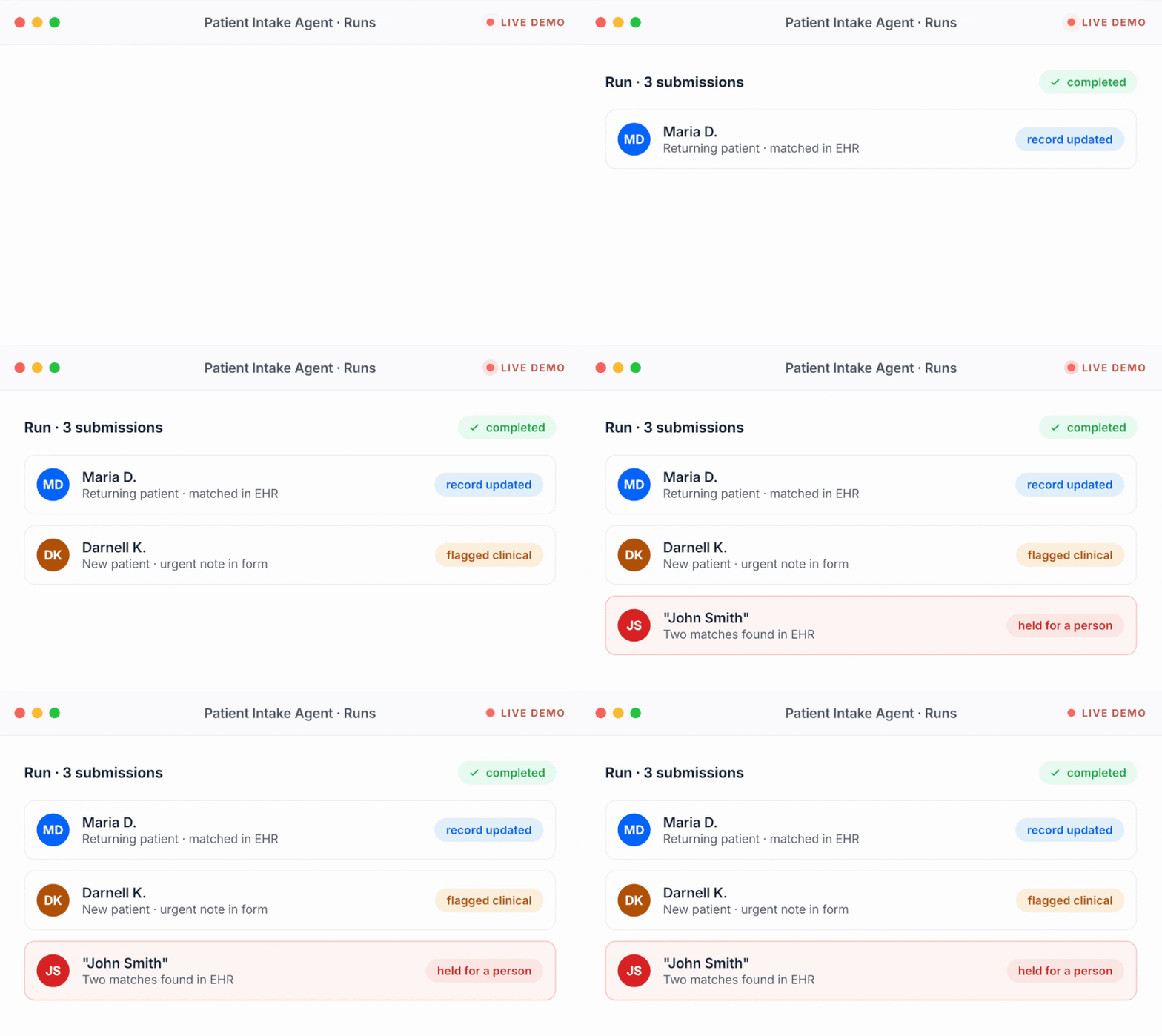
Keragon Agents run the coordination: confirm, remind, rebook, refill. Anything clinical, ambiguous or urgent routes to your team. They never triage symptoms, judge urgency, or decide what care someone needs.
HIPAA handling and a BAA included
Appointment data is handled like the PHI it is
Built for every scheduling flow, from solo practices to groups
Solo practice or multiple locations, the flow is the same: requests captured, valid slots offered, the booking written back, changes handled. Keragon runs it on the EHR you already use.
Appointment scheduling on autopilot, from request to kept visit
Describe the job and Keragon runs it end to end, connected to your EHR, scheduler, calendars and messaging, HIPAA-compliant, even after hours.


Connect your EHR, and everything around it.
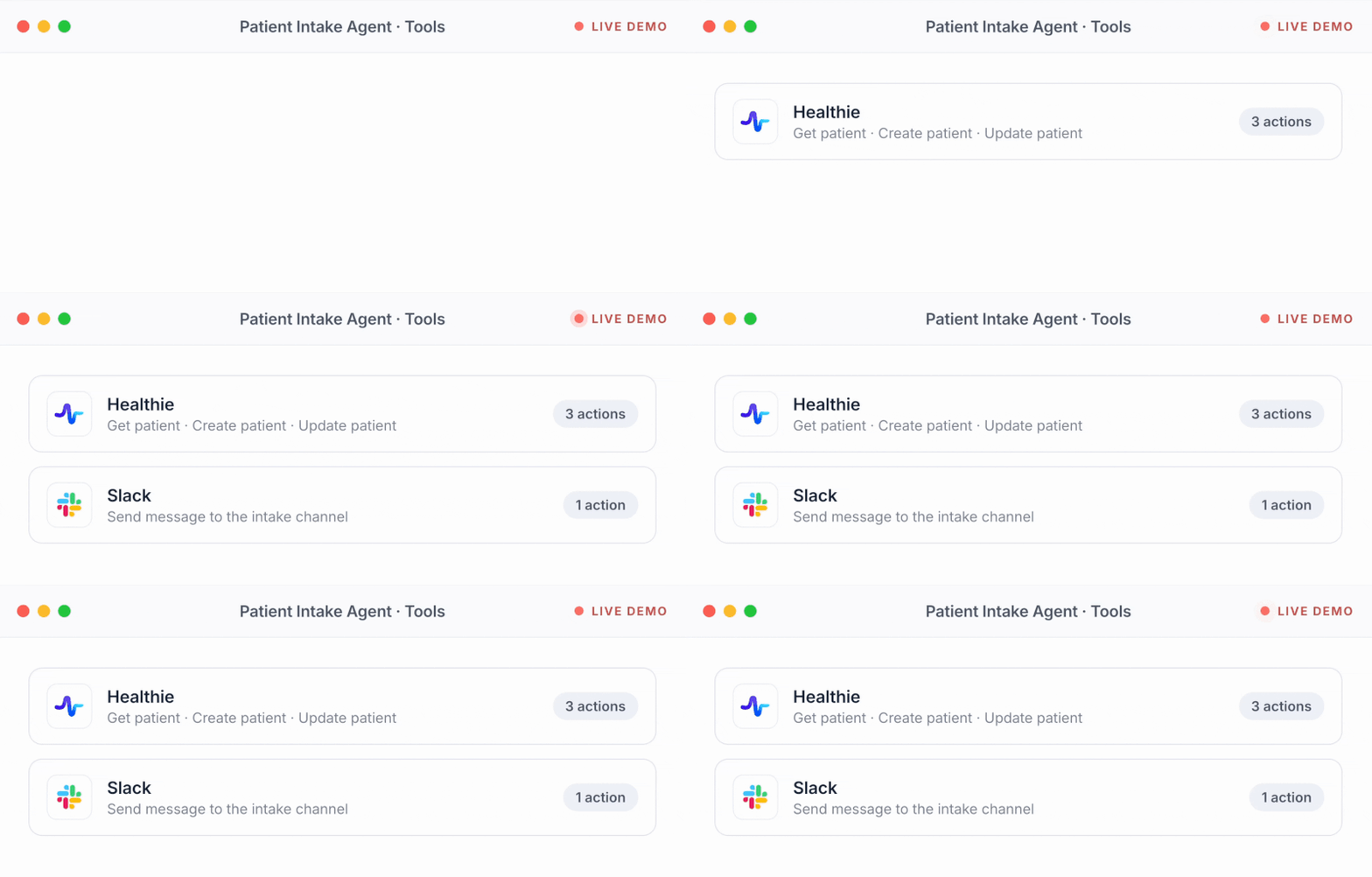
400+ HIPAA-compliant integrations across 30+ EHRs, scheduling, billing, and communications. If there’s an API in healthcare, we can connect it.
























Standardizing scheduling across a multi-location group?
What would you like to automate in your scheduling?
Pick a common job or describe your own. The AI consultant maps the workflow across your systems before you sign up.
Sync my scheduling software with my EHR
Sync my scheduling software with my EHR
Set up two-way appointment sync between my EHR and my scheduler
Set up two-way appointment sync between my EHR and my scheduler
Check whether a new appointment is a new or existing patient
Check whether a new appointment is a new or existing patient
Send reminders that let patients confirm, reschedule or cancel
Send reminders that let patients confirm, reschedule or cancel
Recapture last-minute cancellations with a standby waiting list
Recapture last-minute cancellations with a standby waiting list
Check state licensing and network coverage before a booking is accepted
Check state licensing and network coverage before a booking is accepted
Notify my team when an appointment is cancelled or rescheduled
Notify my team when an appointment is cancelled or rescheduled
Assign appointment types or locations to specific team members
Assign appointment types or locations to specific team members
Notify the team when an appointment is marked completed in the EHR
Notify the team when an appointment is marked completed in the EHR
Appointment scheduling, before and after Keragon
The same week, run two ways.
See your own before and after. Put your appointment volume into the calculator, and see what a fuller, self-running schedule gives back.
Estimate what automated scheduling is worth ›Patient scheduling software books. Automation keeps the schedule full.
Keragon doesn't replace your scheduling tool or your EHR. It runs the job across them.
| By hand | A scheduling tool on its own | Your communication stack + Keragon | |
|---|---|---|---|
| Taking a booking | Phone tag and a paper calendar | Its own calendar, reconciled by hand | Approved slots offered anywhere, written straight to your EHR |
| Reminders | Called one by one | Fixed blasts, even to cancelled visits | Sent on your cadence, stopped the moment plans change |
| A cancellation | An empty slot nobody refills | A first-come blast to the whole waitlist | Offered to patients who fit the visit type, provider and lead time |
| The compliance chain | Paper handling risk | Their BAA covers their app | A BAA across the automation layer and every connected step |
Learn more about appointment scheduling automation
Guides from the Keragon library, written for healthcare teams.
Scheduling guides
Calendars in sync
FAQ
Appointment scheduling questions, answered
What is appointment scheduling automation?
Appointment scheduling automation is software that runs the work around the calendar: it captures booking requests from your website, phone or referrals, offers only times that fit your rules, writes the appointment to your EHR or practice management system, sends confirmations and reminders, handles cancellations and rescheduling, and follows up on no-shows. Keragon does this across the systems you already use, with 400+ HIPAA-compliant integrations and AI teammates that handle the follow-up.
Does Keragon replace my scheduling software or EHR?
No. Keragon is the automation layer that runs across them. Your EHR or practice management system stays the source of truth for the calendar, and tools like NexHealth, Acuity Scheduling and Calendly are integrations we work with, not products we replace. Keragon connects the booking to everything around it: reminders, eligibility, waitlists, follow-up and reporting.
Can patients book directly, or do staff approve requests?
Both models work. Routine requests that clearly match your rules can book straight into the calendar; ambiguous or higher-risk requests route to your team for approval, with the details already collected. Either way the patient is told honestly whether the time is booked or requested, and nothing is promised that staff still need to confirm.
How do referrals reach Keragon in the first place?
Through whatever channel they arrive today. A fax lands in your e-fax tool and is processed into structured fields, a portal or form submission triggers the workflow directly, and phone referrals enter through a quick internal form. From there the same booking and closure loop runs regardless of the source.
How does Keragon avoid wrong appointment types and double-booking?
Your EHR or practice management system stays the single booking authority, and patients only see visit types, providers and times your rules allow. Where a system supports it, availability is validated at booking time, and every write is logged. These are behaviors you configure and test, so most practices start with one bounded appointment type and expand as accuracy is proven.
Can it handle cancellations, rescheduling and waitlists?
Yes. Patients can confirm, cancel or reschedule from the reminder itself, the change is written to your EHR, and stale reminders stop. When a slot opens, the waitlist offer goes only to patients who fit the visit type, provider and lead-time rules you set, and the offer stops once someone accepts.
Can I automate referral and recall scheduling?
Yes. When a referral or recall lands, outreach runs on your cadence until the patient books, declines or needs a person, and unresolved cases escalate to the right team instead of going quiet. Booked outcomes write back to the chart, so referral-to-scheduled conversion is finally measurable.
We already use Zapier. Why switch?
Zapier is a general-purpose tool and doesn't offer a BAA, so patient data in it is a compliance risk. A scheduling workflow is only HIPAA-compliant when every link in the chain is covered, including the automation layer that moves the data. Keragon is HIPAA-compliant middleware built for healthcare, with a BAA included on every paid plan.
Is Keragon HIPAA-compliant, and do we get a BAA?
Yes. Keragon is HIPAA-compliant and SOC 2 Type II audited, data is encrypted in transit and at rest, and a BAA is included on every paid plan. Every agent action is written to an audit log your team can review at any time.
Are automated appointment reminders allowed under HIPAA?
Yes. HHS treats appointment reminders as treatment communications, so they are permitted without a separate authorization, as long as message content stays minimal and patients' channel preferences are honored. AI in the workflow is compliant when every system in the chain, including any voice vendor, is covered by a BAA. Keragon connects HIPAA-capable tools and is covered by a BAA itself.
Where does appointment data go, and who can see it?
Data moves between the systems you connect and nowhere else. You choose which tools an agent can reach and what it can do in each one, and access is scoped per connection. Every read and write is logged, so your compliance story is reviewable at any time.
Built for healthcare scheduling
Every slot filled with the right patient.
Start with one scheduling workflow and one EHR. Keep your systems, keep your team in control.
14-day free trial · no credit card · cancel anytime