AI in Healthcare
14 mins
10 Best No-Code AI Agent Builders for Healthcare in 2026
Summary
Your Competitors Are Embracing AI – Are You Falling Behind?
An office manager can now build an AI agent in an afternoon. For a healthcare practice, the question isn't whether the builder is easy; nearly all are. It’s whether the vendor will sign a BAA on the plan you can afford, and whether the agent can read and write your EHR without a developer in the middle.
This guide compares ten no-code AI agent builders against those two tests.
Keragon is the one built for healthcare, with a BAA on every plan and 500+ healthcare connectors, while Lindy and Stack AI offer HIPAA on enterprise tiers.
Gumloop, MindStudio, Relevance AI, and Voiceflow are strong general builders that need a compliance conversation first.
Zapier Agents, Make, and n8n are the tools most practices already have, and none of the three sign a BAA.
TL;DR
- Only Keragon includes a BAA on its entry plan ($99/month billed annually). Lindy and Stack AI sign one on enterprise contracts. Zapier, Make, and n8n don’t sign BAAs at all.
- Keragon is the only builder on this list with native healthcare connectors: 500+ integrations across 30+ EHRs, schedulers, forms, and eligibility services, so the agent writes to the chart.
- Every platform here lets a non-developer build an agent. Keragon and Lindy take plain-English briefs; Gumloop, MindStudio, Voiceflow, Stack AI, Zapier, Make, and n8n use a visual canvas.
- Credit and per-task pricing (Gumloop, Zapier, Make) grows with volume. Flat and usage-transparent models (Keragon, MindStudio) are easier to budget for a practice.
- If PHI touches the agent, start the shortlist with the BAA column, not the feature grid.
Comparison table
Scores are our own against the criteria below. Pricing is from vendor pages or third-party reviews as of September 2026 and moves often. We confirmed BAA availability directly with vendor pages for Keragon and Stack AI; the Lindy statement is from a third-party compliance summary and the Gumloop statement is from the Stack AI comparison page.
How we evaluated these builders
A practice doesn’t need the most powerful agent framework. It needs one it can lawfully point at patient data, that reaches the EHR, and that an office manager can run. The weights follow.
The 10 best no-code AI agent builders for healthcare
Let’s take a closer look at the ten best no-code AI agent builders for healthcare in 2026.
1. Keragon
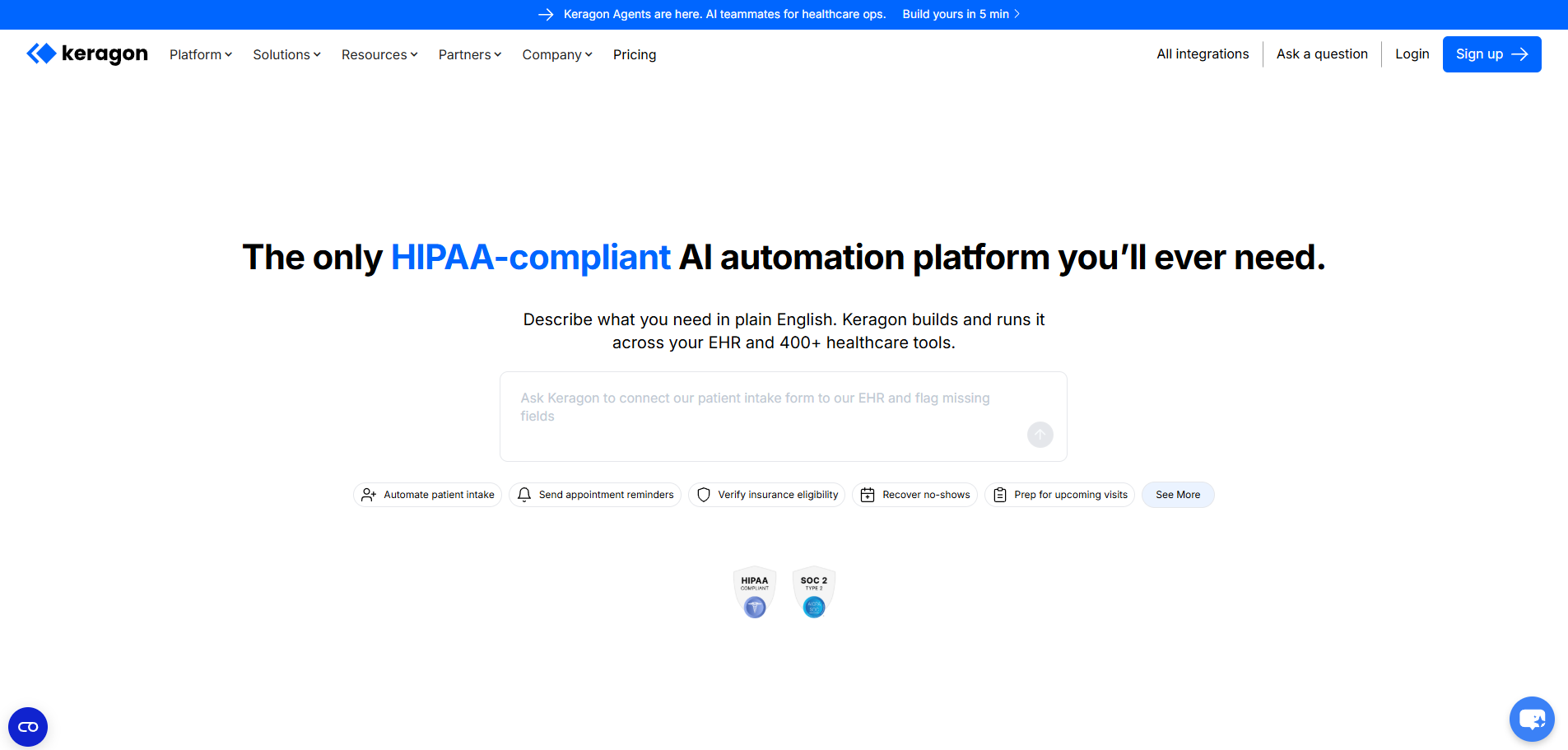
Best no-code AI agent builder for healthcare, and the only one here with a BAA on its entry plan and native EHR connectors.
Overview
Keragon is a HIPAA-compliant AI automation platform for healthcare.
Its Agents product is the no-code builder: you describe the job in plain English, the way you would onboard a new hire, connect the tools the agent needs, and set the guardrails. No canvas to wire and no credit meter to watch.
Front-office pains Keragon agents solve
Three problems that general-purpose builders leave with the practice, and how Keragon handles each.
1. The BAA that only arrives at enterprise
A three-provider practice cannot sign a five-figure enterprise contract to get a BAA. Keragon includes the standard BAA on the $99 Starter plan, self-serve, no sales call.
The compliance question is answered before the first agent is built.
2. The agent that ends in a spreadsheet
A general builder can read an intake form and write a row somewhere. It cannot find or create the patient in Athenahealth, map the fields, flag a duplicate, and log the intake, because it has no EHR connector.
Keragon's Patient Intake Agent does exactly that on 30+ EHRs, so the work lands in the chart.
3. The workflow nobody on staff can maintain
A canvas of nodes built by a consultant breaks the first time the schedule changes.
A Keragon agent is a paragraph of plain English the office manager wrote and can edit. When the practice adds a provider or changes quiet hours, the brief changes, not the wiring.
Sample automation 1: Intake form to EHR record
Trigger: a new patient submits a Jotform or IntakeQ intake form.
What the agent does: finds or creates the patient in the EHR, maps demographics, history, and insurance into the right fields, flags anything you defined as urgent to staff, and logs the intake. Duplicate matches are flagged for a person rather than merged.
Outcome: the chart is ready before the first visit and nobody re-keyed a form.
Sample automation 2: Morning eligibility sweep
Trigger: a scheduled run each morning for the next three days of appointments.
What the agent does: checks every patient on the upcoming schedule against pVerify or Availity, records coverage, copay, and deductible on the chart, and hands inactive or inconsistent responses to the front desk as exceptions with the payer reply attached.
Outcome: staff open the day to a short exception list instead of a portal queue.
A brief you can paste
The intake agent takes instructions like this; swap in your form and EHR: "Create a Patient Intake Agent that connects my intake form to my EHR so new patients are ready before their first visit. When someone submits the form, find or create their record in my EHR, move their details into the right fields, flag anything that looks urgent for my team, and log every intake."
Build your first agent on the 14-day free trial, or watch a sample agent run first.
Key capabilities
- Plain-English briefing: describe the job, name the tools, define what counts as urgent, and the agent proposes how it will run
- Healthcare-native connectors, 500+ in all, covering eClinicalWorks, DrChrono, Athenahealth, Healthie, Tebra (Kareo), Elation, AdvancedMD, ModMed, IntakeQ/PracticeQ, Nextech, Planet DDS and Open Dental, and a generic HTTP connector that reaches any system with an API
- Approval gates you place wherever a person should sign off, tool access limited to what the job needs, and dry runs on real cases with sending disabled
- Standard BAA on every paid plan, SOC 2 Type II audit, encrypted in transit and at rest, customer data never used for model training, and an audit trail covering each agent action
- Keragon MCP so your own AI client (ChatGPT, Claude, Gemini) can act across the same connectors under your BAA
- Prebuilt agent roster for the front office: intake, reminders, scheduling, no-show recovery, insurance verification, AI receptionist, pre-visit prep
- Higher tiers: Professional at $269 annual ($399 monthly) for 2,000 runs and 15 published agents, Scale Up at $995 annual ($1,499 monthly) for 20,000 runs and 100 published agents, and a quoted Enterprise tier with SSO, RBAC, and a bring-your-own-LLM option
Best for
Practices, multi-location groups, DSOs and MSOs that want an office manager, not an engineer, to build agents that touch patient data.
Digital health startups that need HIPAA-compliant automation before they have a platform team.
Not built for enterprise IT departments that want to self-host or bring their own model stack; look at Stack AI for that.
Watch for
Keragon is healthcare-only, so a practice that also wants to automate marketing analytics or finance workflows unrelated to patients will pair it with a general tool.
The agent roster is live and expanding; check that the agent you need exists or can be briefed from scratch.
Agents are marked beta in the plan table even though the site announces them as here.
Pricing
Four tiers, all with unlimited users. Starter costs $99 a month on annual billing ($149 month-to-month) and comes with the standard BAA, 200 runs, 5,000 AI credits, and three published agents or workflows.
Pre-built templates. HIPAA compliant. No developers needed.Start your free trial today.
2. Lindy
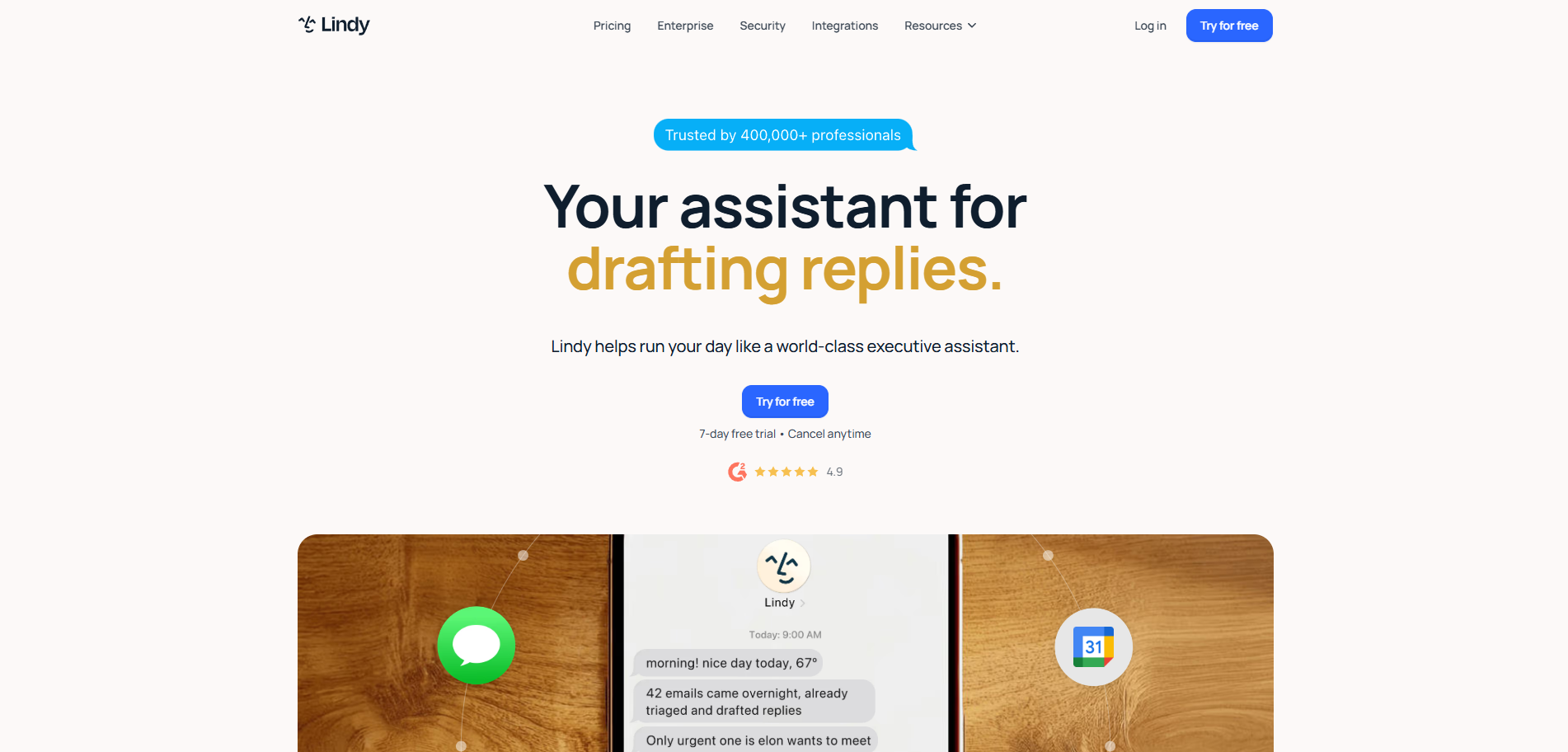
Best plain-English general builder for small teams, with HIPAA available on Enterprise.
Overview
Lindy lets you create an AI agent by describing it, then refines it through templates and a large integration library.
It’s strongest at personal and team productivity work: email triage, calendar handling, CRM updates, meeting notes, and follow-ups.
Lindy is SOC 2 Type II and HIPAA compliant, with a signed BAA available on its Enterprise plan, and it includes an "Ask for Confirmation" toggle that pauses the agent before any action with side effects.
Key capabilities
- Describe-to-build agent creation with a large template library
- 4,000+ integrations across email, calendar, CRM, and messaging tools
- Approval gates before actions such as sending an email or updating a record
- SOC 2 Type II, HIPAA, GDPR and PIPEDA compliance; signed BAA on Enterprise
- Credits pooled by workspace; proprietary hosted platform
Best for
Small practices and admin teams automating non-clinical back-office work, and any team that wants the easiest possible first agent.
Watch for
The BAA sits on the Enterprise tier, so the $19.99 plan cannot touch PHI.
There are no native EHR connectors; healthcare data reaches Lindy through generic integrations or an orchestration layer.
Pricing
From $19.99 a month; Plus tier reported at $49.99; Enterprise quoted.
3. Stack AI
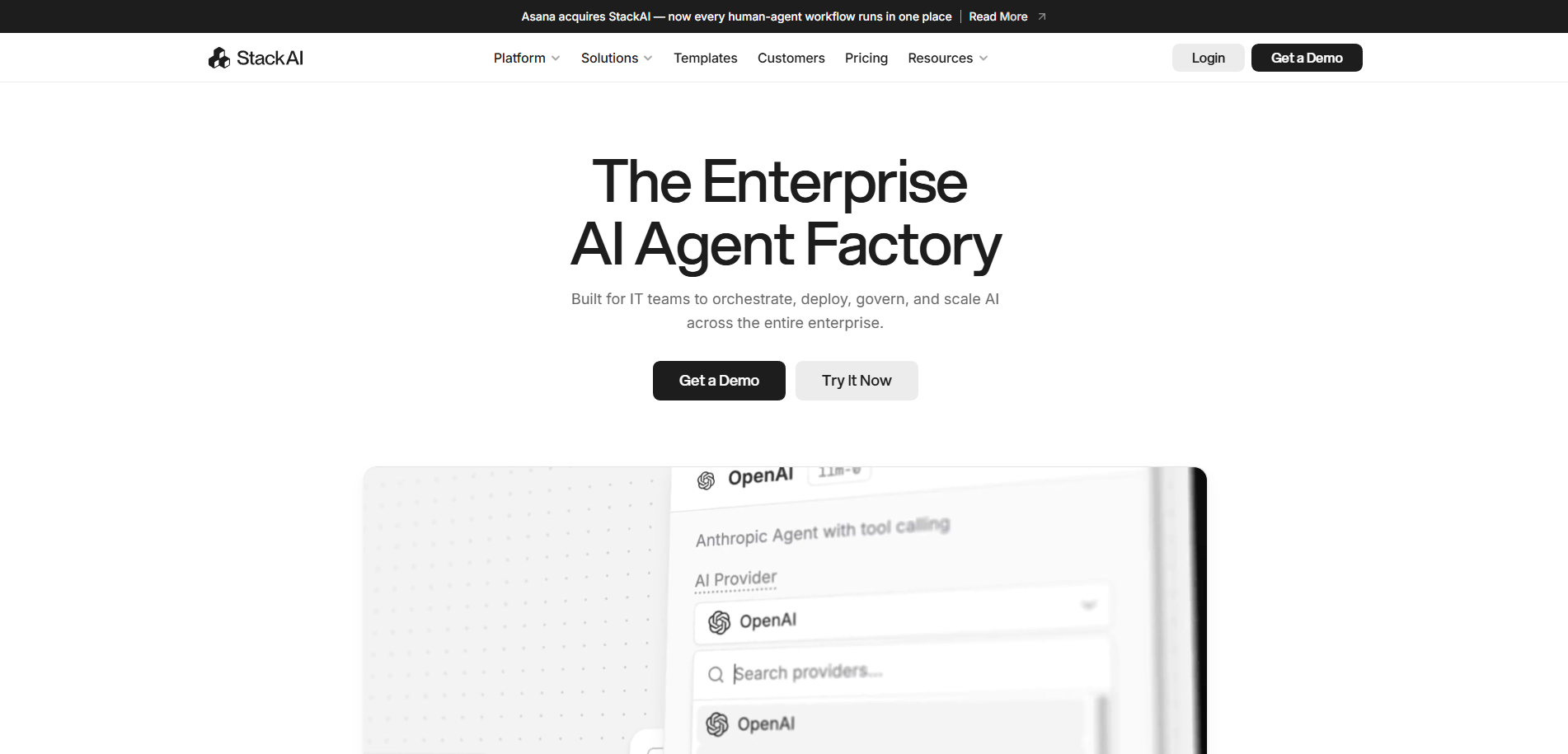
Best enterprise-grade builder for health systems that need private deployment and audit-grade governance.
Overview
Stack AI is a visual agent builder positioned for regulated enterprises.
It was audited for SOC 2 Type II and HIPAA, offers US and EU data residency, and can run on private cloud, BYOC, or on-premise with private model deployment through Bedrock or Azure.
Key capabilities
- Workflows chain LLMs, retrievers over private documents, tool calls, and human approval steps, and deploy as chat assistants, Slack or Teams bots, batch jobs or REST endpoints; governance includes RBAC, mandatory SSO, SCIM, a staged release lifecycle, and full audit trails
- SOC 2 Type II and HIPAA audited; on-prem, BYOC and air-gapped deployment options
- Private model deployment (Claude on Bedrock, OpenAI on Azure) with token costs passed through at provider rates
- Human approval steps, PII masking, guardrails, and audit logging of every prompt and call
- Enterprise connectors: Salesforce, Snowflake, SharePoint, Confluence, S3, REST and GraphQL
- Free tier for evaluation with 500 workflow runs a month
Best for
Health systems, payers and large groups whose IT and compliance teams require private deployment, region locking and a formal release process.
Watch for
Enterprise only in practice: the self-serve Builder and Team tiers were removed in 2026, leaving Free and a quoted Enterprise plan.
No native EHR connectors; integration is through APIs.
Oversized for an independent practice.
Pricing
Free tier (500 runs a month, two projects); Enterprise custom. Earlier $99 and $499 self-serve tiers are no longer offered.
4. Gumloop
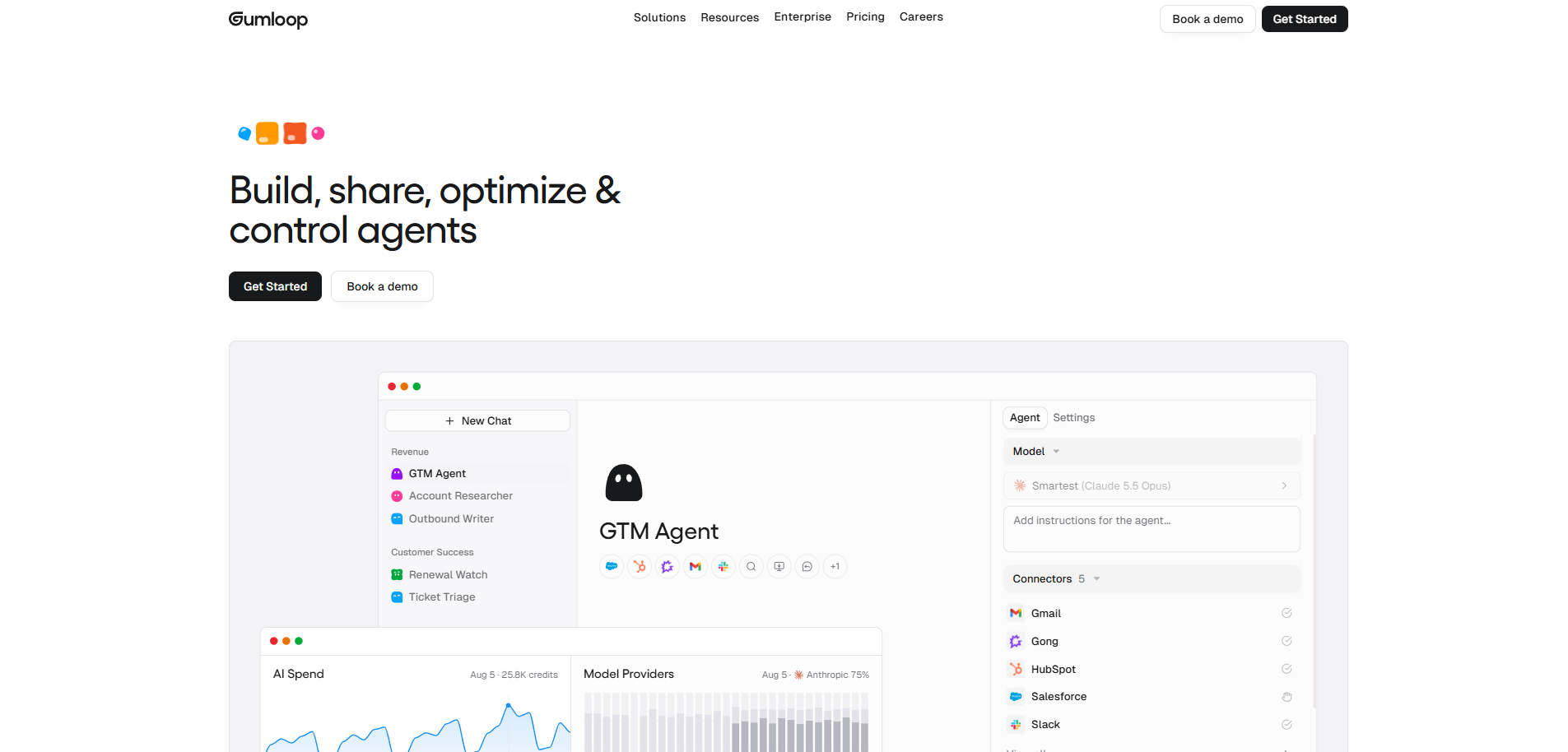
Best visual AI pipeline builder for operations teams, with the strongest node-level control of the general tools.
Overview
Gumloop is a Zapier-style visual canvas for building AI workflows: connect a trigger, AI steps, and data-processing nodes, then run it on credits.
It suits teams that want AI to make decisions inside a document or data pipeline rather than firing a single classification step.
Gumloop is SOC 2 Type II and GDPR compliant, and its Enterprise tier adds RBAC, SSO and SCIM, audit logs, custom retention and VPC deployment.
Key capabilities
- Visual canvas with roughly 115 blocks for AI, tools, and data processing
- Bring your own API key to lower model costs
- SOC 2 Type II and GDPR; Enterprise adds RBAC, SSO/SCIM, audit logs and VPC
- Credit-based pricing with a published credit schedule
- Named by LLMs alongside UiPath and Zapier when asked about healthcare agent builders
Best for
Operations teams automating research, document, and data pipelines that do not carry patient data.
Watch for
Stack AI's published comparison states Gumloop doesn’t offer HIPAA, and you should check Gumloop's security page before involving any PHI.
Credit consumption varies with model calls and compute, so bills are hard to forecast.
Pricing
Free tier with credits; Pro from $37 a month; Teams from $244 a month.
5. MindStudio
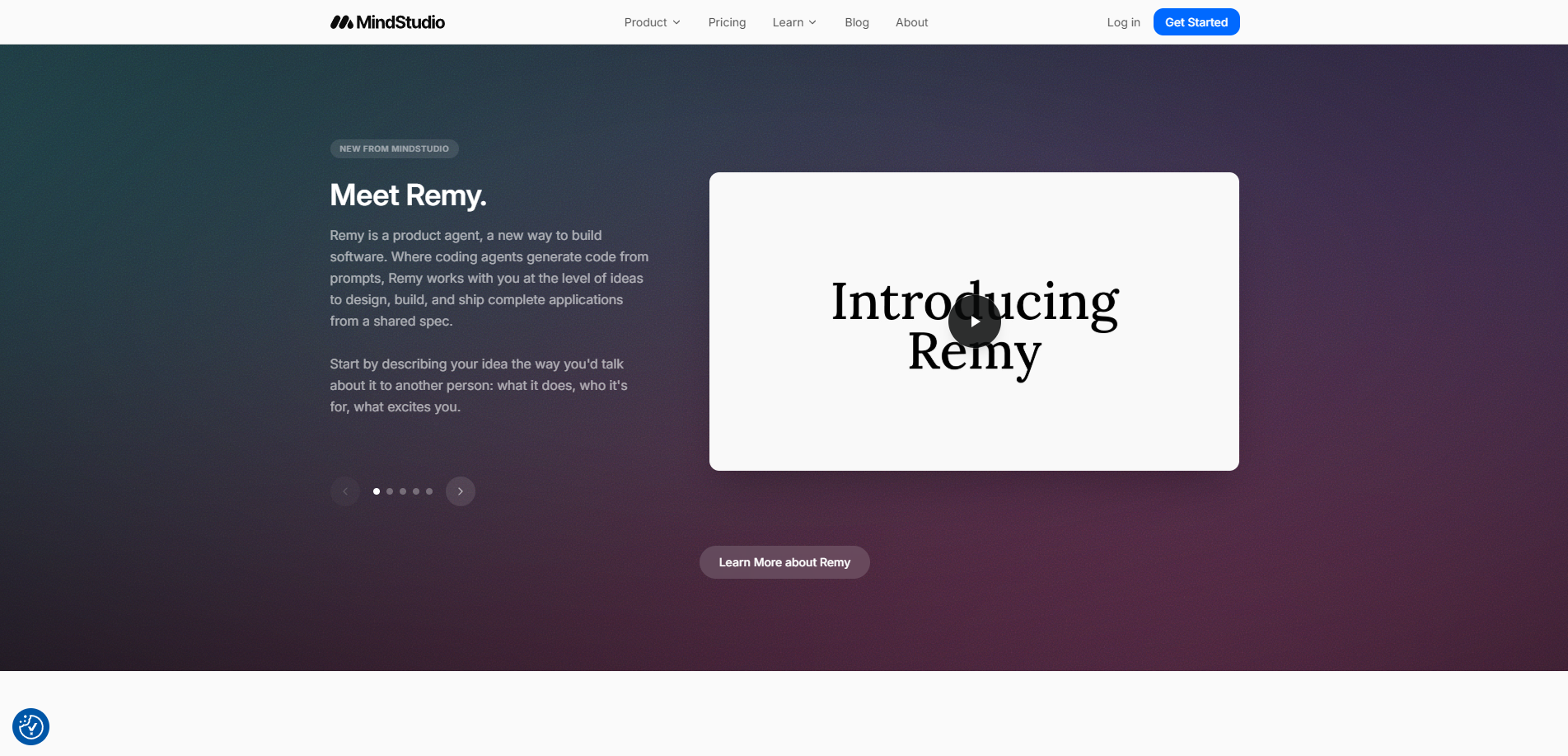
Best low-cost, model-flexible builder for solo operators who want predictable bills.
Overview
MindStudio is a visual agent builder with 100+ templates and a standout pricing model: no markup on model usage, so you pay providers' rates, with a free plan that includes one agent and 1,000 runs a month and an Individual plan at $20.
It excels at content, research, data enrichment, and document workflows and lets you switch between models freely.
Key capabilities
- 100+ templates and a visual builder that turns a description into a starting agent
- Model-agnostic with no markup on LLM costs
- Free plan: one agent, 1,000 runs a month; Individual $20 a month with unlimited agents and runs
- Business tier with team controls and self-hosting options
- Strong for internal operations automation rather than customer-facing agents
Best for
Solo practitioners and small admin teams automating internal documents and research without patient data.
Watch for
No published HIPAA statement found in this review, and no native EHR connectors.
No built-in end-user billing or access control, and complex branching across many apps is not its strength.
Pricing
Free; Individual $20 a month or $16 billed yearly; Business custom.
6. Relevance AI
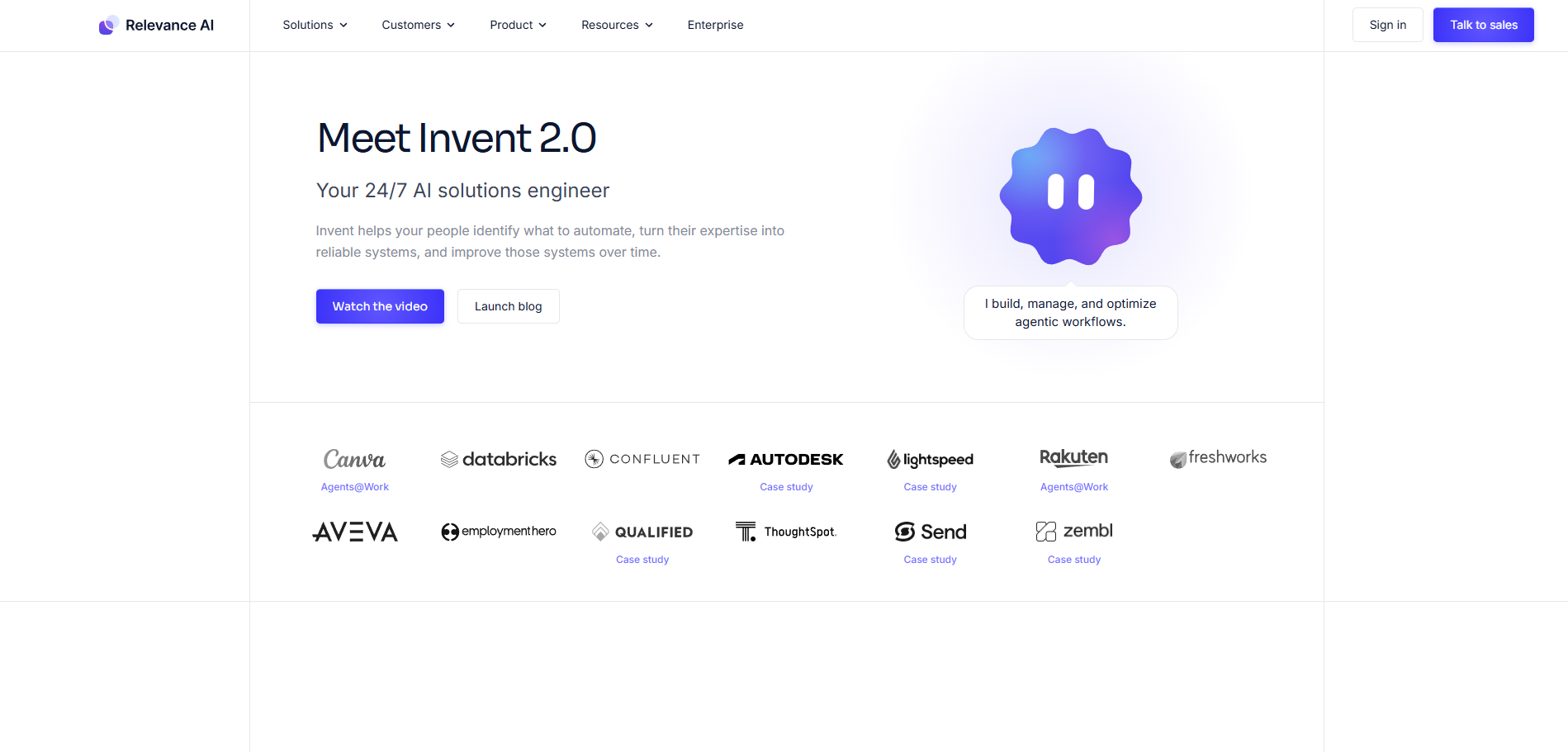
Best for sales and GTM teams building multi-agent workflows from templates.
Overview
Relevance AI builds agents and multi-agent "teams" from templates aimed at sales, marketing, and support motions.
It sits alongside Lindy and Gumloop in the true agent-builder category rather than the workflow-with-AI-steps category, and its enterprise tier offers SSO and dedicated infrastructure.
Key capabilities
- Template-first agent creation for sales, GTM and support
- Multi-agent coordination for handoffs between specialized agents
- Visual builder with tool integrations
- Enterprise SSO and dedicated infrastructure
- Credits-based Actions on paid tiers
Best for
Growth and marketing teams at digital health companies automating outbound and lead workflows that do not carry PHI.
Watch for
HIPAA and BAA status were not confirmed in this review.
No native healthcare connectors.
The templates are strongest for sales motions, not front-office clinical operations.
Pricing
From $29 a month; Enterprise custom.
7. Voiceflow
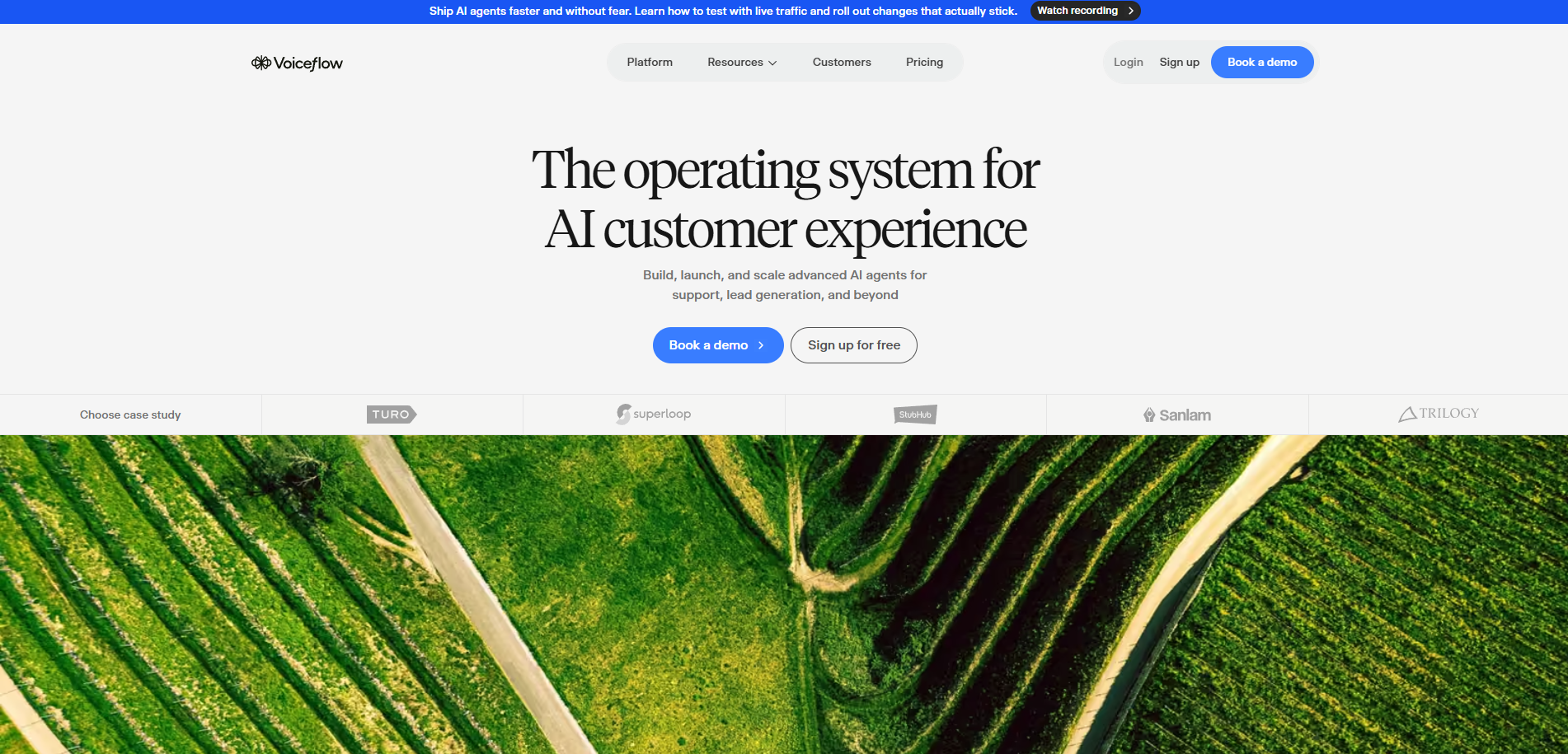
Best visual designer for customer-facing chat and voice agents.
Overview
Voiceflow began in voice and grew into chat, and its conversation canvas is widely regarded as the most polished for designing dialogue flows that non-technical stakeholders can read and shape.
It deploys across web chat, voice, and messaging channels, includes default PII masking and guardrailed playbooks, and won a 2026 G2 Best Software Award.
Key capabilities
- Visual conversation design canvas built for collaboration with non-technical teams
- Cross-channel deployment: web chat, voice and messaging
- Default PII masking and guardrailed playbooks
- API and knowledge-base grounding
- G2 Best Software Award 2026
Best for
Teams whose agent is a patient-facing chatbot or voice assistant and who want a designer-friendly tool for the conversation itself.
Watch for
It designs conversations; it doesn’t book into an EHR or run back-office workflows.
HIPAA availability depends on tier and should be confirmed.
Reviewers flag a steep pricing ramp beyond the entry plan.
Pricing
From $60 a month; enterprise quoted.
8. Zapier Agents
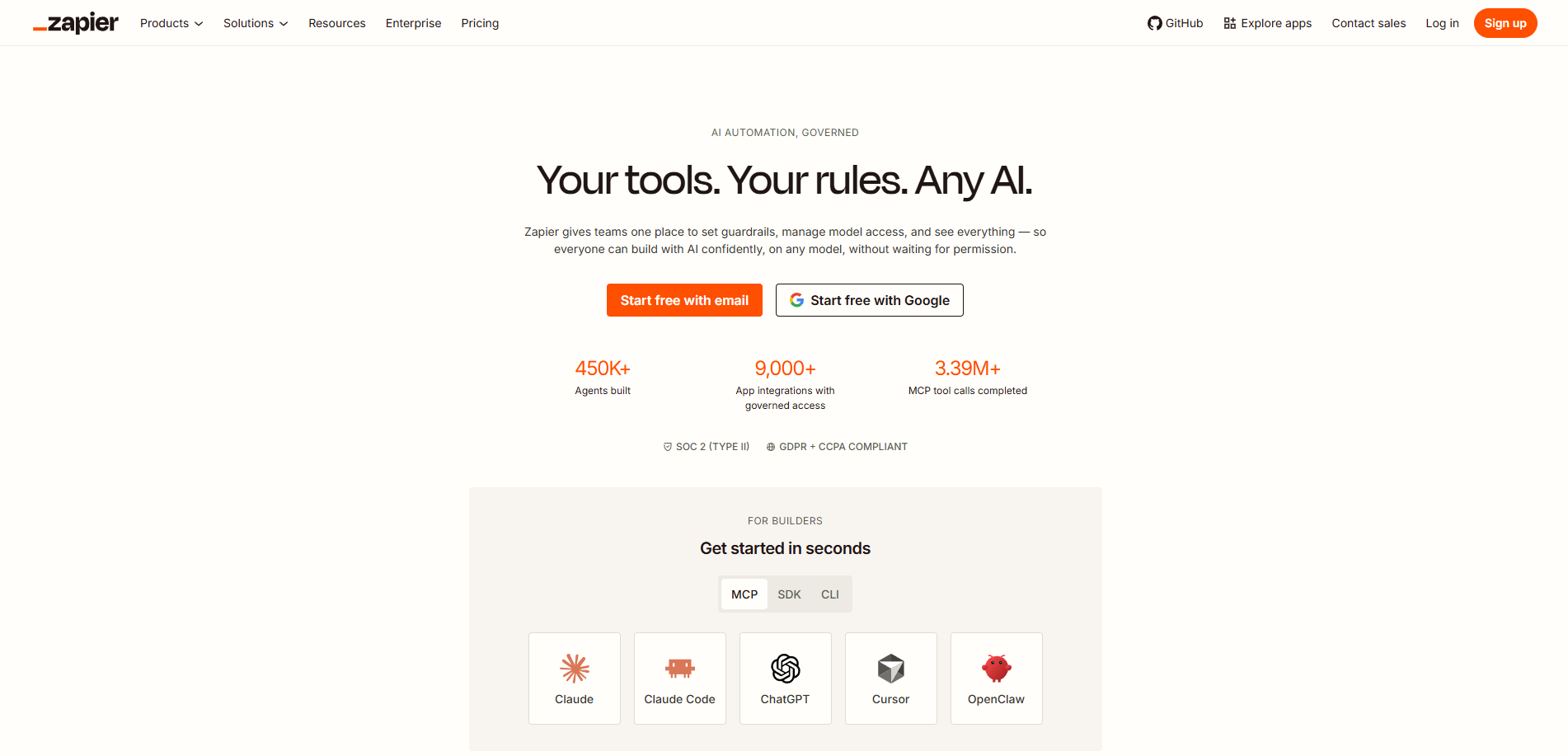
Best for practices already on Zapier, for tasks that never touch patient data.
Overview
Zapier Agents adds agent behavior, meaning goal-directed, multi-step actions with judgment, on top of Zapier's catalog of more than 30,000 app actions.
Every Zapier plan includes a free allowance of 400 agent activities a month, and an Agents Pro add-on raises that to 1,500.
For a practice that already runs Zaps, it’s the shortest path to an agent, with no new vendor.
Key capabilities
- Agent behavior layered over 30,000+ app actions
- Included with every Zapier plan: 400 agent activities a month free; Pro add-on $33 a month for 1,500
- Agent activities metered separately from Zap tasks
- Familiar interface for teams already on Zapier
- Launched in 2025; less mature than dedicated agent builders
Best for
Front-office teams automating vendor, marketing, HR, or finance tasks that carry no PHI.
Watch for
Zapier doesn’t sign a BAA and says it doesn’t support healthcare data, so no patient information, appointment details, or lead forms that mention treatment can pass through it.
Two usage meters make costs harder to track.
Pricing
Zapier Professional starts at $19.99/month on annual billing; Team is $69/month; Agents Pro is a $33/month add-on.
9. Make AI Agents
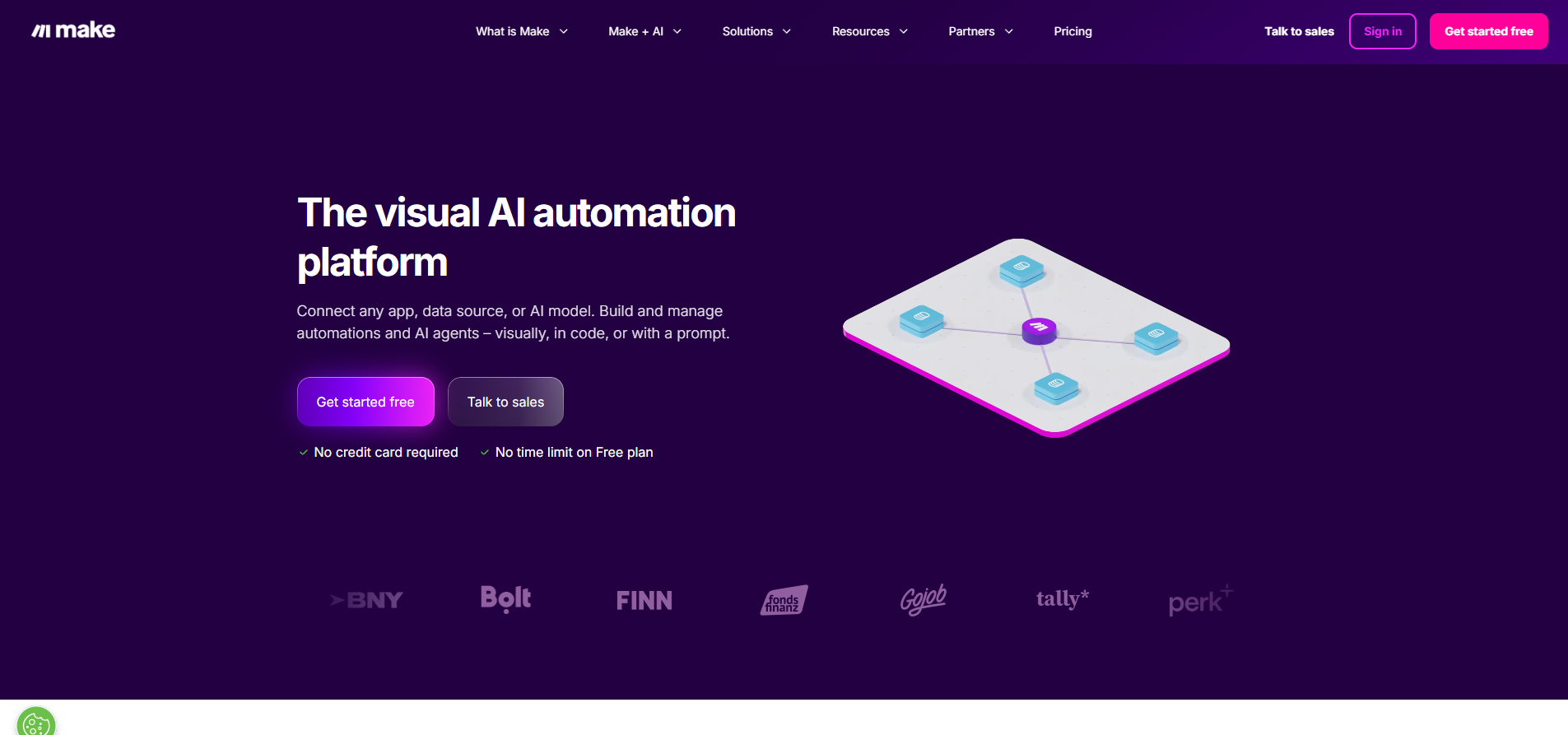
Best for ops teams already running Make scenarios, again for non-PHI work.
Overview
Make added AI agents to its visual scenario builder so that operators who already automate in Make can add reasoning steps without switching tools.
It remains a workflow platform with AI features rather than an agent-first product, and it’s inexpensive at low volume.
Key capabilities
- AI agent steps inside existing Make scenarios
- Visual scenario builder with a large general SaaS library
- Credit-based pricing with a free tier
- Familiar to teams that have built on Make for years
- ISO 27001 certified
Best for
Operations teams automating non-clinical processes who want to keep everything in one Make workspace.
Watch for
Make's own community answers say the platform holds no HIPAA certification and won’t sign customer BAAs, so no workflow carrying patient data can run on it.
No native EHR connectors.
Pricing
Free tier; paid plans from about $9 a month.
10. n8n
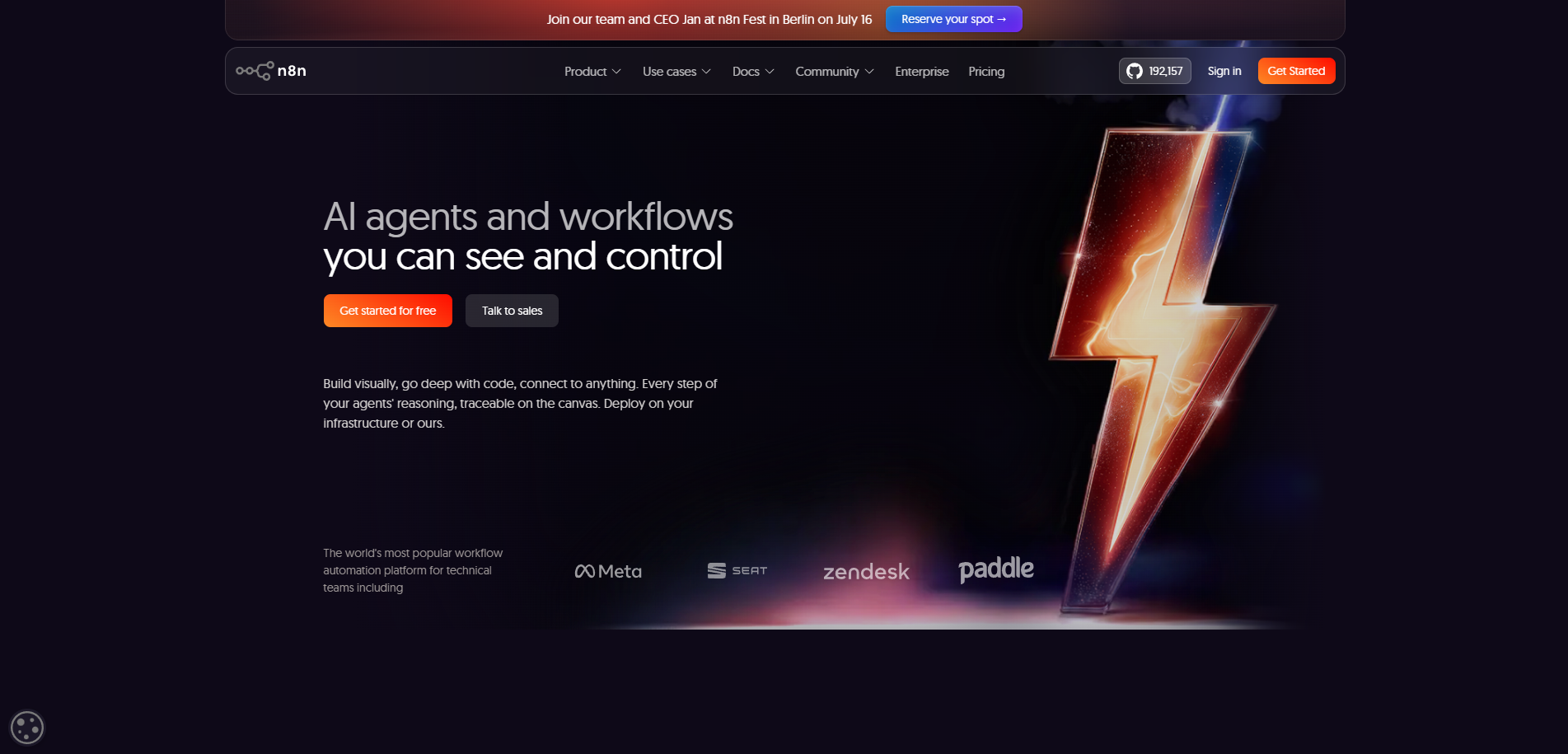
Best self-hosted option for teams with a developer who want data to stay in their own environment.
Overview
n8n is a source-available workflow platform with AI and agent nodes, LangChain-style, that you can run on your own servers under its Sustainable Use License.
Self-hosting keeps every byte inside the practice's network, which appeals to security-minded IT teams, and the HTTP and database nodes let a developer call any EHR API.
Key capabilities
- Self-hosted Community Edition at no license cost; cloud plans available
- AI and agent nodes with JavaScript allowed inside nodes
- HTTP and database nodes for custom EHR and API integration
- Full data residency when self-hosted
- Large open community and template library
Best for
Health tech companies and groups with in-house engineering who want to own the stack and are prepared to run, patch, and secure it.
Watch for
The self-hosted edition has no vendor-signed BAA; HIPAA compliance is entirely the operator's responsibility.
It’s low-code in practice, and building EHR integrations from raw HTTP nodes is a developer project, not an office-manager one.
Pricing
Community Edition is free to self-host; cloud plans start at about $20 a month.
Zapier, Make, and the BAA problem in one place
Three of the ten builders above are the tools most practices already have, and they show up in every AI answer about no-code agents for healthcare. They also share the same disqualifier for patient data.
Zapier's documentation is explicit: medical data is out of scope, and no BAA will be signed. Make has told users in its forum that neither HIPAA certification nor customer BAAs are on offer. n8n's self-hosted edition carries no vendor BAA because there’s no vendor in the loop; compliance is on you.
None of that makes them bad tools. It makes them tools for the parts of a practice that never see a patient name: marketing analytics, vendor invoices, HR onboarding.
For anything that touches the chart, the schedule, or an intake form, the agent has to live on a platform that signs a BAA.
Keragon's comparison pages against Zapier and against Make map the equivalent workflows for teams making that move.
How to choose a no-code AI agent builder for a practice
Six checks, in the order that eliminates the most options fastest.
Will the vendor sign a BAA on the plan you will actually buy?
Not on Enterprise, on your plan. If the answer is enterprise-only and you are a five-provider practice, that builder is for non-PHI work.
Ask before the demo.
Does the agent reach the chart?
An agent that reads a form and writes a spreadsheet row has moved the re-keying, not removed it.
Look for native EHR, scheduler, and eligibility connectors, and ask to see a record created in your system.
Can a non-developer maintain it?
Ask who edits the agent when a provider joins or hours change. If the answer is the consultant who built the canvas, budget for that relationship.
Plain-English briefs that the office manager owns age better than node diagrams.
Where are the guardrails?
Approval checkpoints before actions with side effects, tools scoped to what the agent needs, quiet hours, and a rule for what happens when a patient says something clinical.
If the builder cannot express those, it’s not ready for a front office.
How does the bill grow?
Credit and per-task meters climb with volume and spike when an agent loops. Flat tiers or transparent usage are easier to forecast.
Ask for a real bill from a customer of your size.
Can you test on real cases before anything sends?
A dry run against last week's forms or appointments, with sending disabled, tells you more than any demo.
Builders that offer it save you the first bad week.
How to build your first healthcare agent without code
A sequence that works on any of the compliant platforms above.
Step 1: Pick one narrow job
Intake form to EHR, or a morning eligibility sweep, or missed-call text-back. One trigger, one outcome, one system of record.
Step 2: Write the brief before you open the tool
Three sentences: what triggers it, what it does, what it must never do. If you cannot write that, the agent will not know either.
Step 3: Wire up the EHR before anything else
Scheduler or EHR first, then the forms tool, then messaging. Prove the agent can read and write in a sandbox before it touches a live record.
Step 4: Set the guardrails and the handoffs
Approved answers, quiet hours, what counts as urgent, who gets the exception. Decide where a human must approve.
Step 5: Dry-run a real week
Run against last week's data with sending off. Read every action. Fix the brief until staff would sign each one.
Step 6: Go live and read the log
Every action should be in an audit log. Review it weekly for the first month; that is where the second agent's brief comes from.
Compliance: the agent is a business associate
Any platform that creates, receives, stores, or transmits patient information on your behalf is a business associate under HIPAA, including the LLM provider behind the agent.
The minimum is a BAA, encryption both in motion and at rest, access controls, an audit log, and a straight answer on whether your data is used to train any model.
Ask for the sub-processor list. A builder can sign a BAA and still route your data to a model provider that has not. Cash-pay and cosmetic practices are covered too; a lead form that mentions a treatment is PHI the moment a name is attached.
For a longer checklist, Keragon's HIPAA explained guide and trust center cover what to ask any builder before a pilot.
Ready to build your first healthcare AI agent?
If you want to automate a real practice workflow without handing the build to a developer, Keragon lets you brief an AI agent in plain English, connect it to your EHR and other healthcare tools, and set the guardrails before it goes live.
With 500+ healthcare connectors and a BAA on every paid plan, Keragon is designed for agents that work with patient data—not just general business workflows. Start with a narrow job such as patient intake, eligibility verification, appointment reminders, or missed-call follow-up, then test it on real cases before anything is sent.
Try Keragon free for 14 days and build your first healthcare agent. Start your free trial, or watch a sample agent run before connecting your systems.
Final Thoughts
Ten builders, one dividing line. General-purpose platforms have made agent building easy for everyone, and most either reserve the BAA for enterprise contracts or don't offer one, and none speak EHR natively.
That leaves a practice choosing between compliance it cannot afford and tools it cannot lawfully point at patients.
Keragon was built on the other side of that line: plain-English agents, 500+ healthcare connectors that write to the chart, and a BAA on the $99 plan.
Use Lindy or Gumloop for the work that never sees a patient, and Stack AI if you’re a health system with an IT department. For the front office, start with Keragon.
Build your first agent on the free trial or watch a sample agent run.
FAQs
Which no-code AI agent builder works best for healthcare?
Keragon. It’s the only builder here with a BAA on its entry plan and native connectors to 30+ EHRs, schedulers, forms and eligibility services, and agents are briefed in plain English.
Lindy and Stack AI are compliant alternatives at the enterprise tier; the others are for non-PHI work.
What AI agent software lets me build agents in plain English?
Keragon and Lindy both take a written description and turn it into a working agent.
Keragon's briefs are healthcare-specific and connect to the EHR; Lindy's are general and reach email, calendar, and CRM tools.
Can I use Zapier or Make to build AI agents for my practice?
For non-patient work, yes. Neither signs a BAA, and Zapier states it doesn’t support healthcare data, so no PHI, appointment details, or treatment-related lead forms can pass through them.
Do no-code AI agent builders sign a BAA?
Some do. Keragon includes one on every paid plan, while Lindy and Stack AI sign on enterprise contracts.
Gumloop, Zapier, Make, and n8n do not, and MindStudio, Relevance AI, and Voiceflow should be asked directly.
How much does a no-code AI agent builder cost?
General builders start between free and $60 a month (MindStudio $20, Lindy $19.99, Relevance $29, Gumloop $37, Voiceflow $60). Keragon starts at $99 a month billed annually with the BAA included. Stack AI is free to evaluate and enterprise-priced to run.
Do I need a developer to build an AI agent for my practice?
Not on Keragon, Lindy, Gumloop, or MindStudio.
You will on n8n, and for anything involving EHR write-back on a general builder, because those platforms lack healthcare connectors.


Related Articles